Sacred Earth Adventures
From a flat, four-trip menu to a page for every destination.
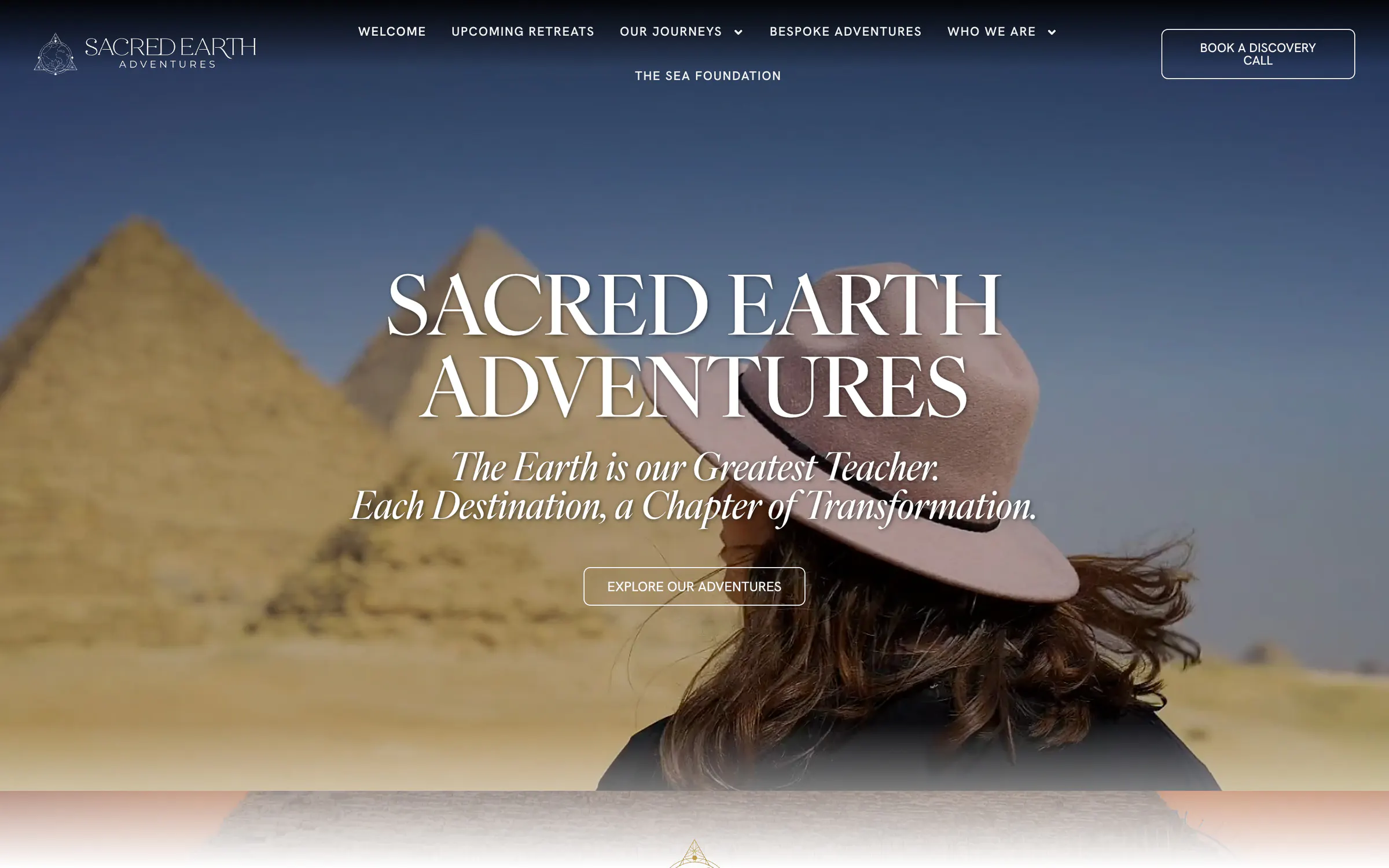
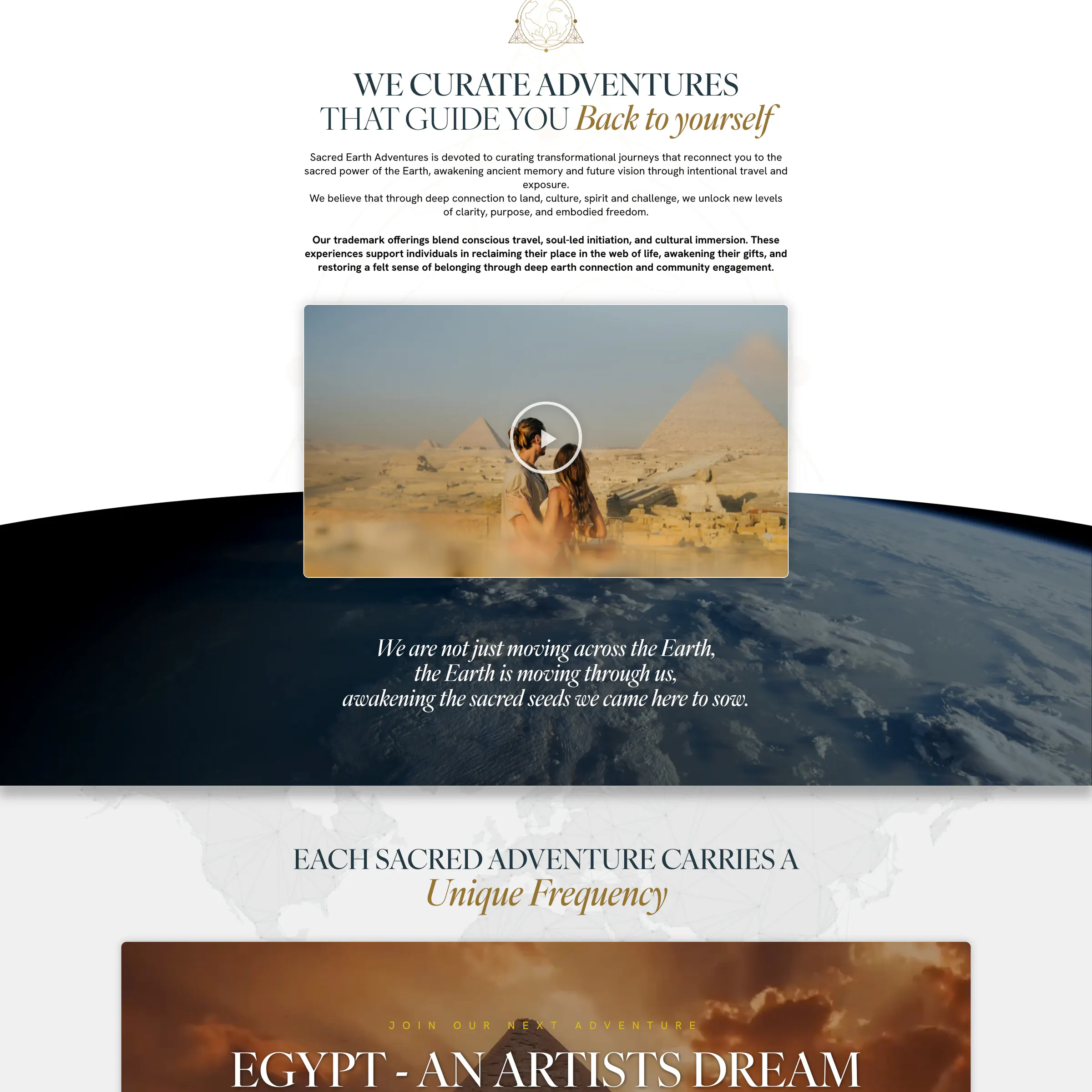
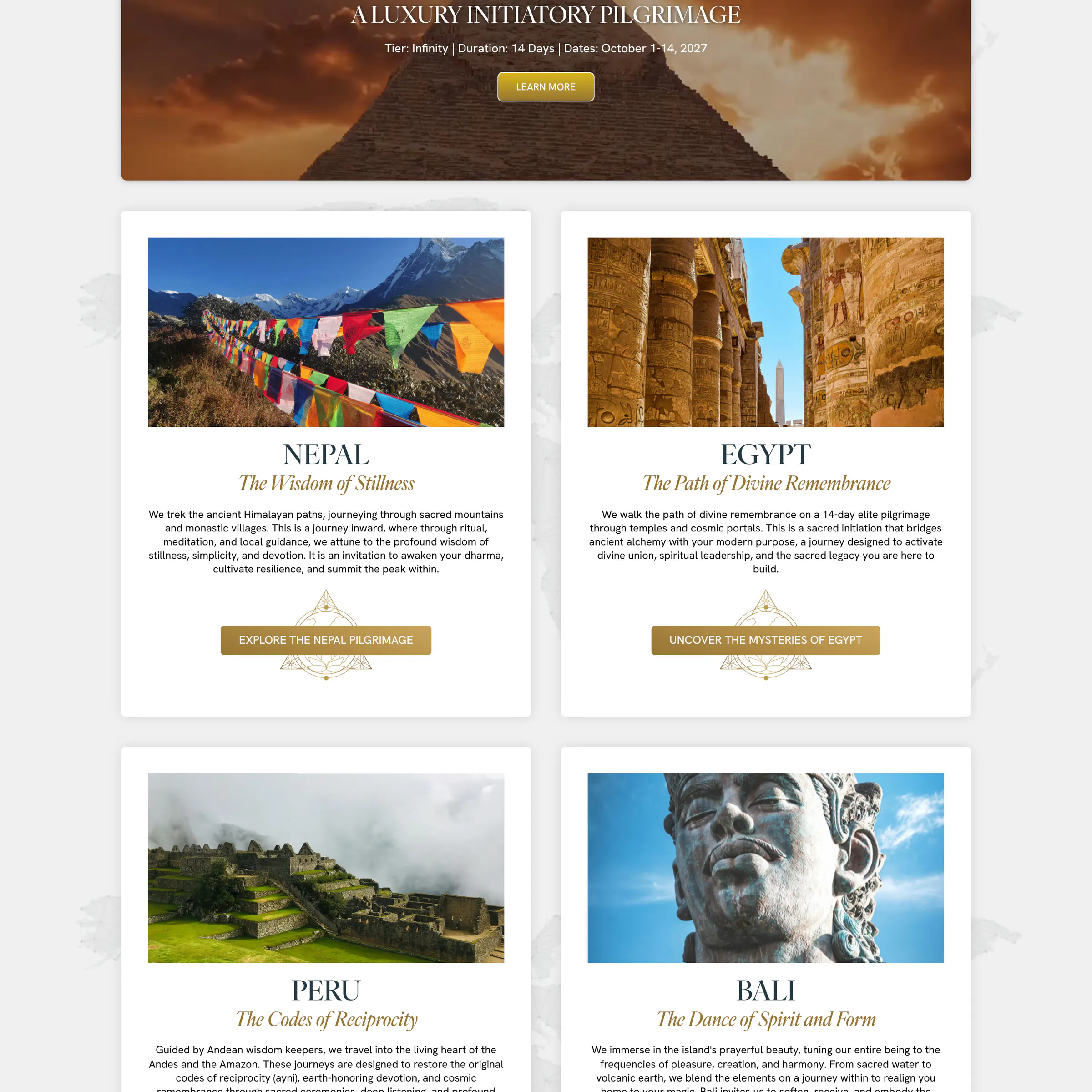
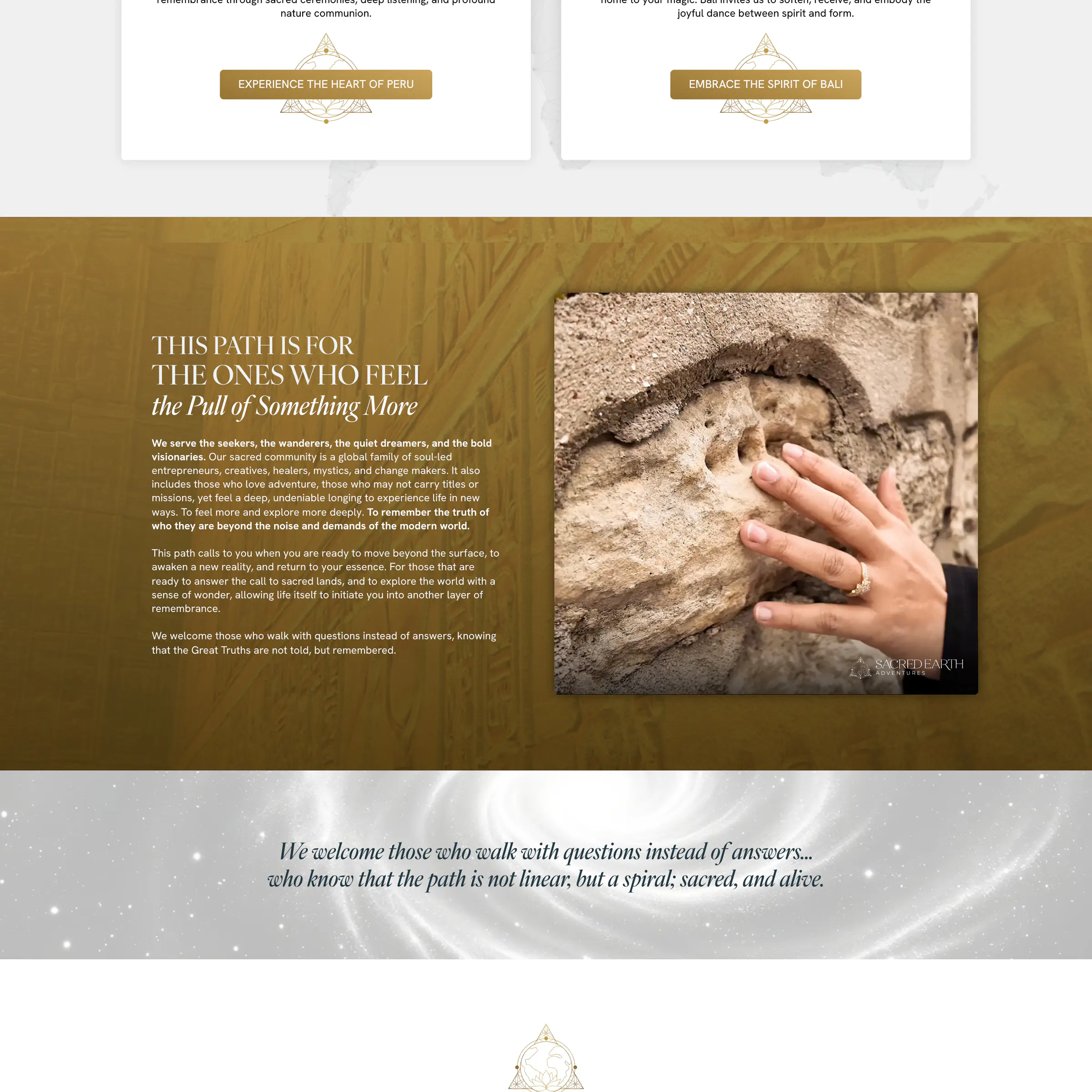
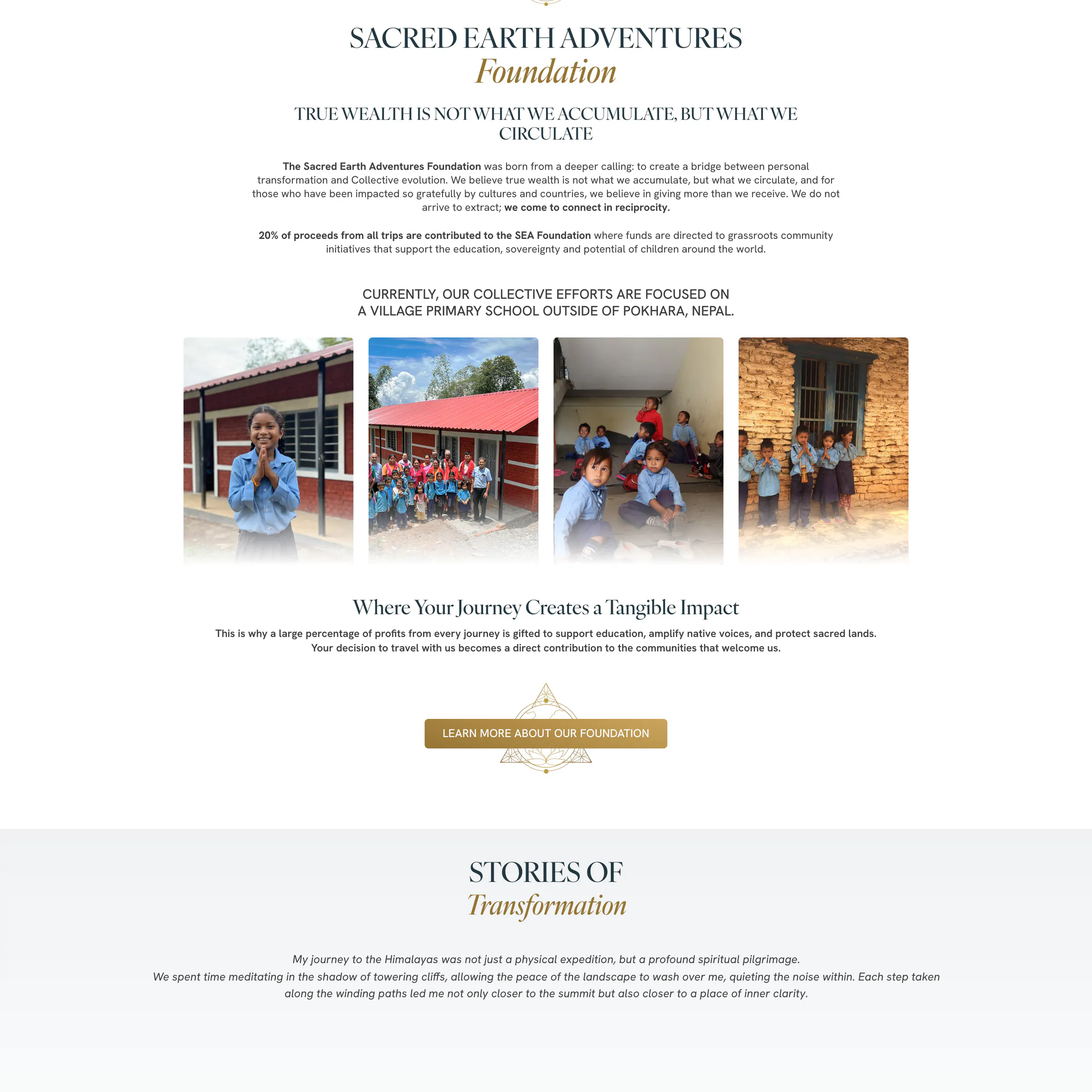
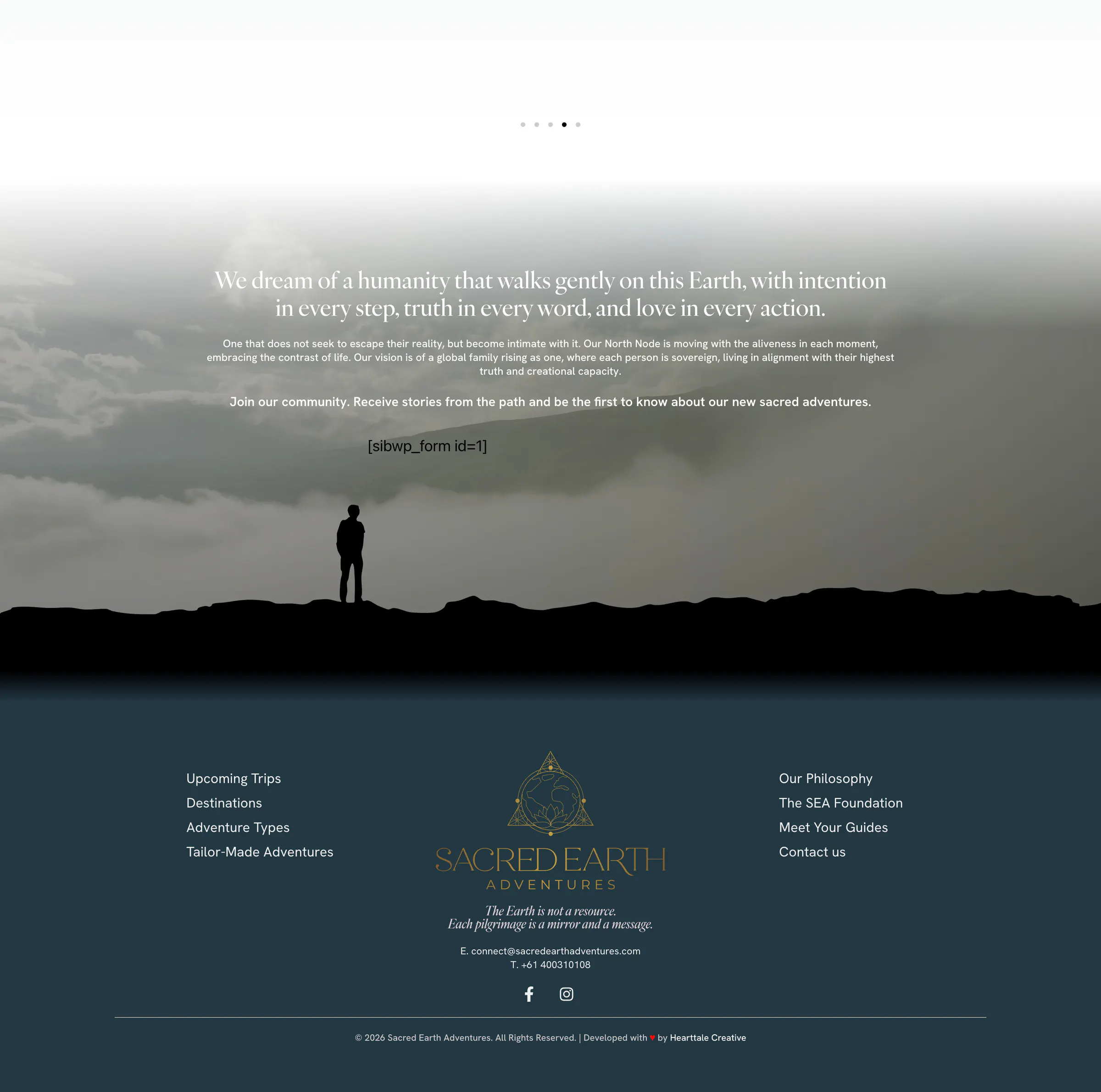
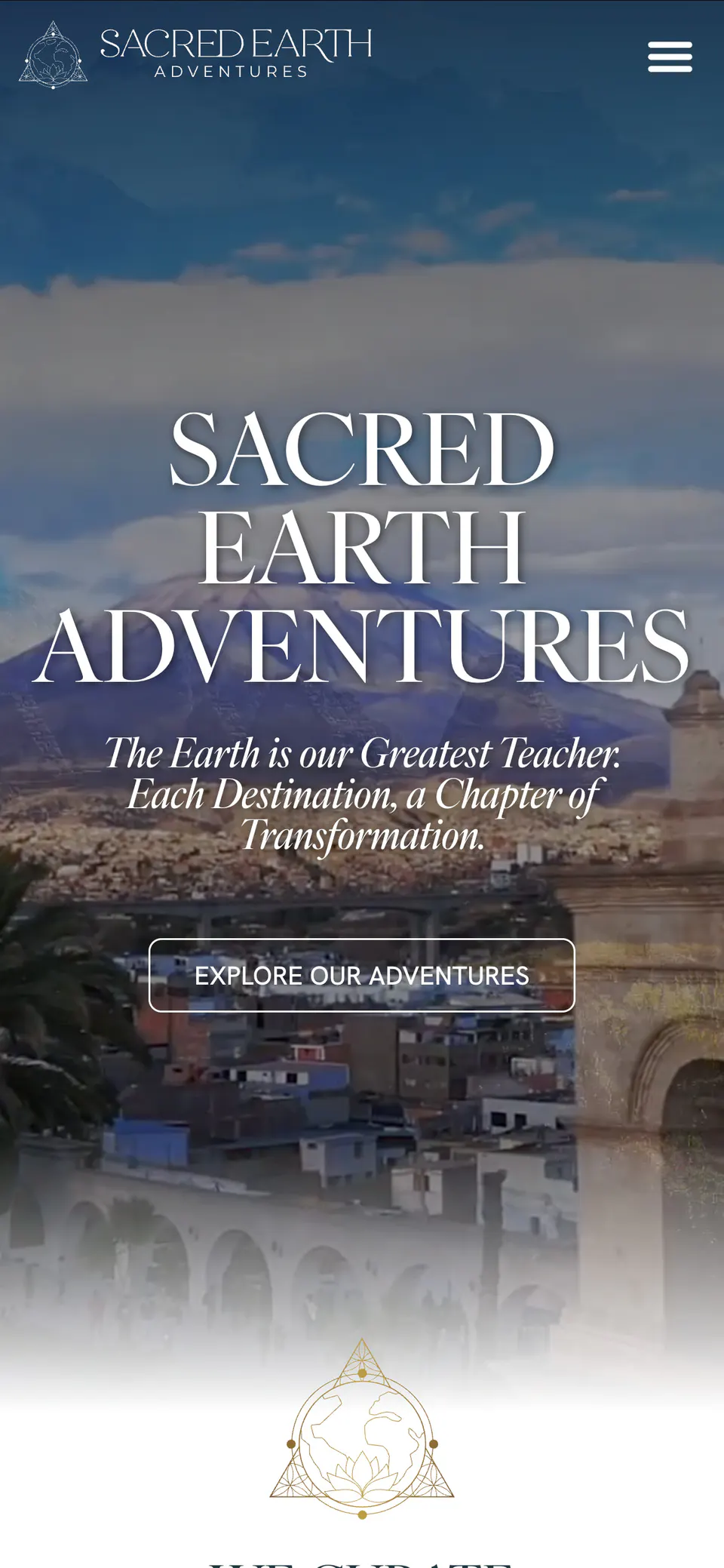
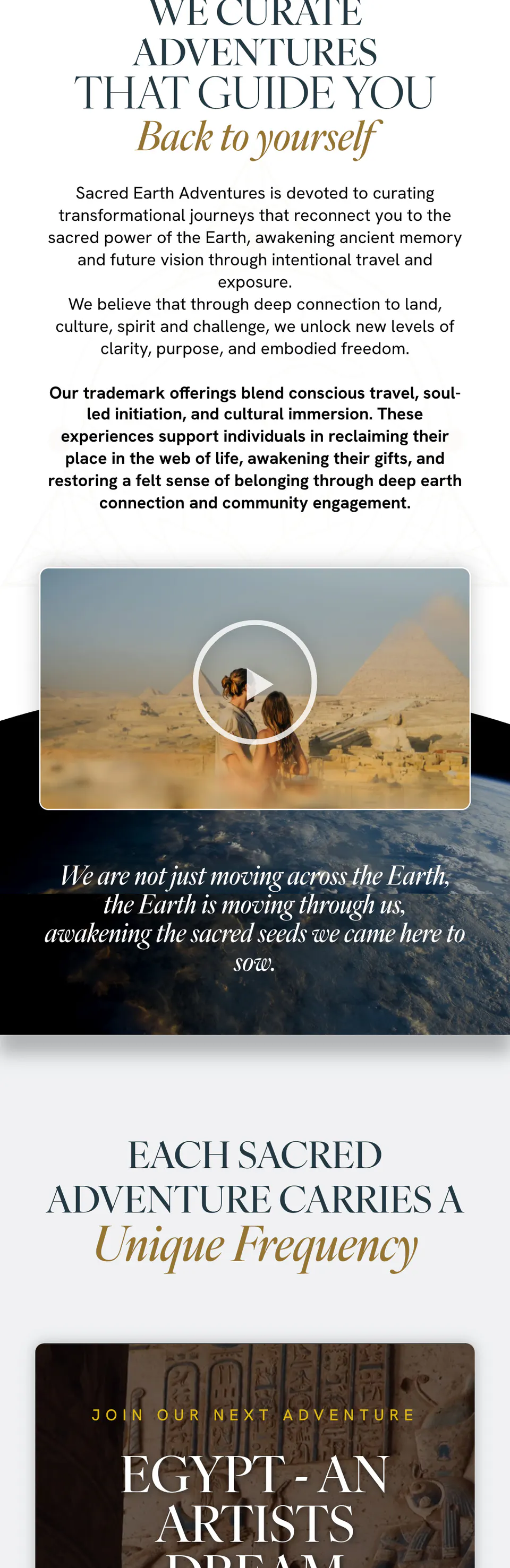
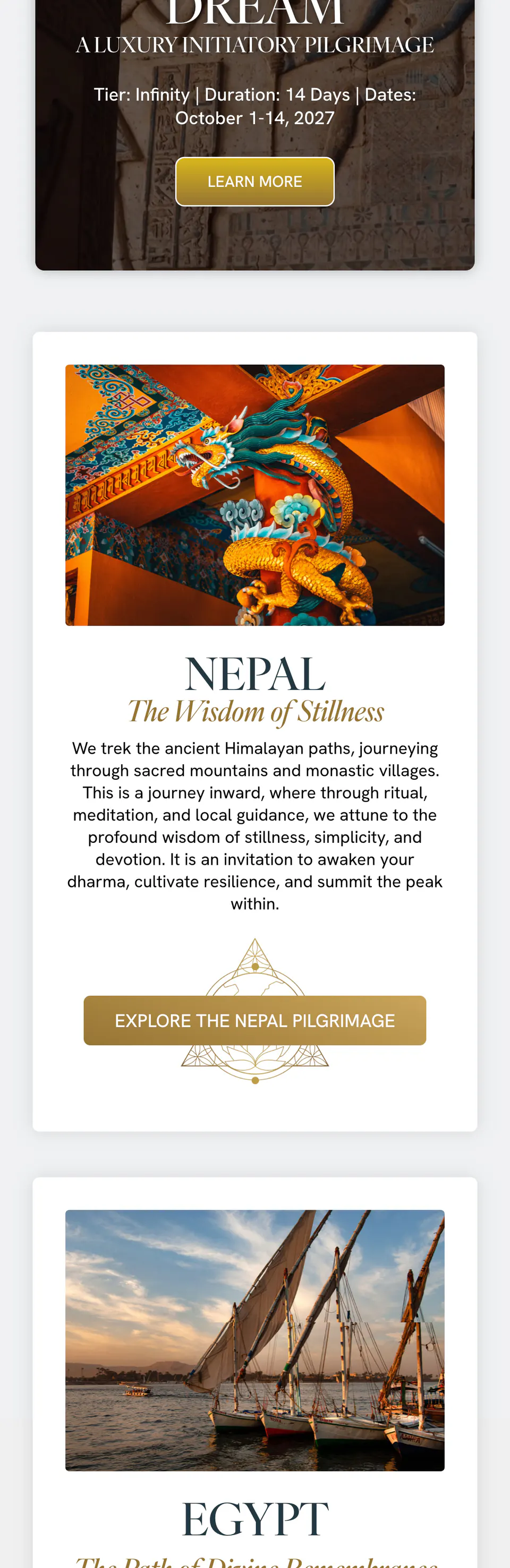
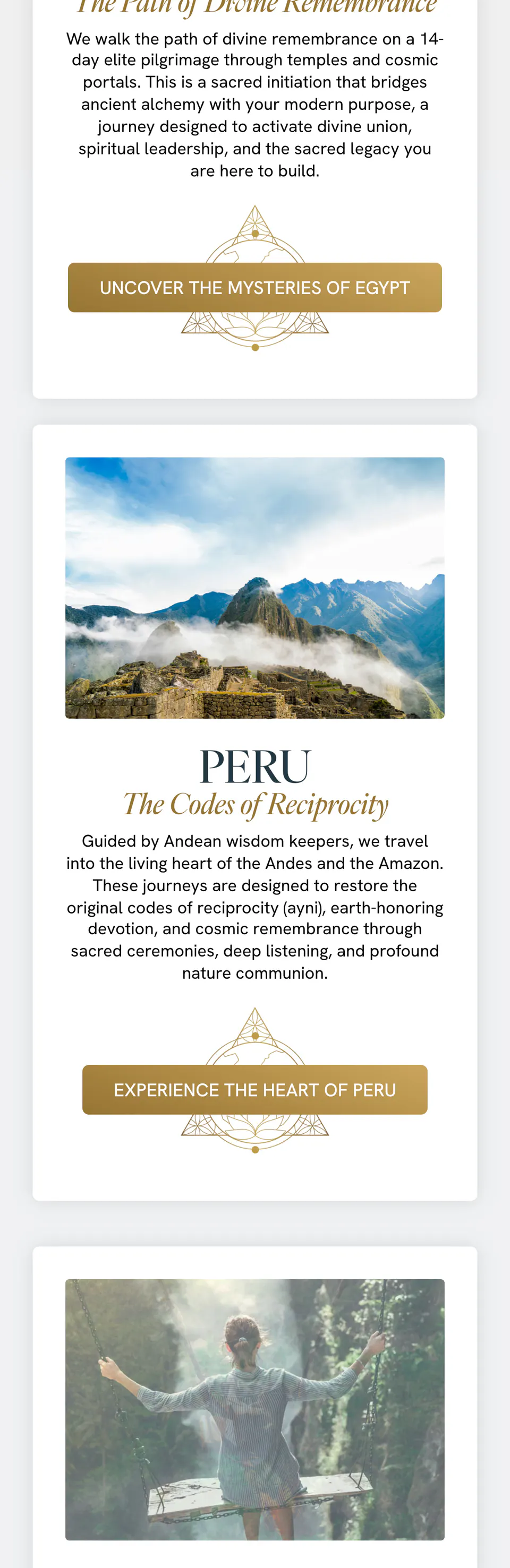
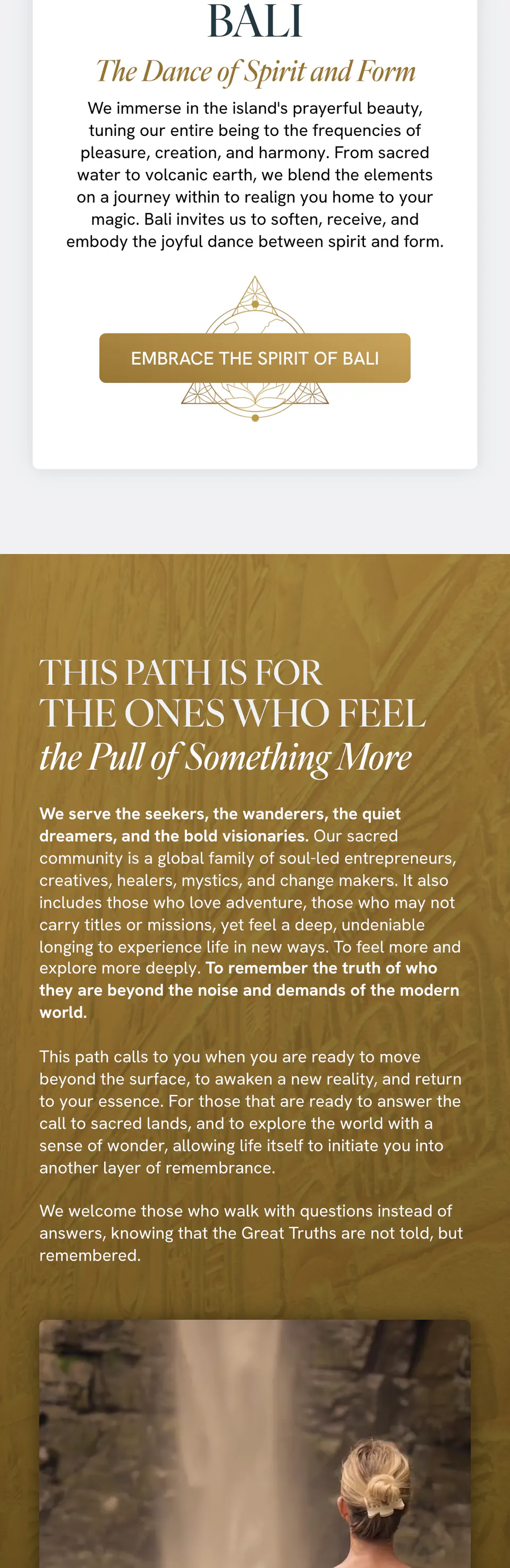
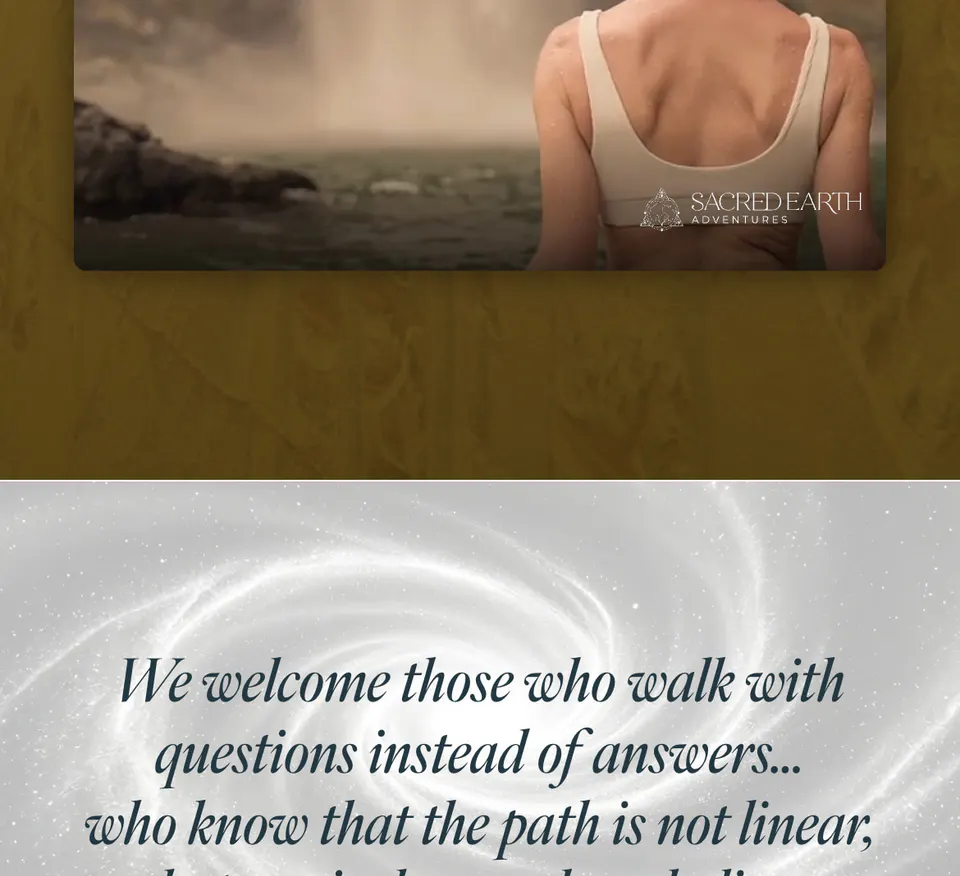
sacredearthadventures.com, captured in September 2026.
The client
(The client)
Sacred Earth Adventures leads small-group pilgrimages to Nepal, Egypt, Peru and Bali, for people who want more than a vacation.
The trips range from Explorer, the most accessible, to Infinity, led in person by founders Demi Ward and Kade Fallins. Twenty percent of every trip goes to the SEA Foundation, which funds a primary school outside Pokhara, Nepal. For Demi and Kade, the business and the cause were never two separate things.
Where we found them
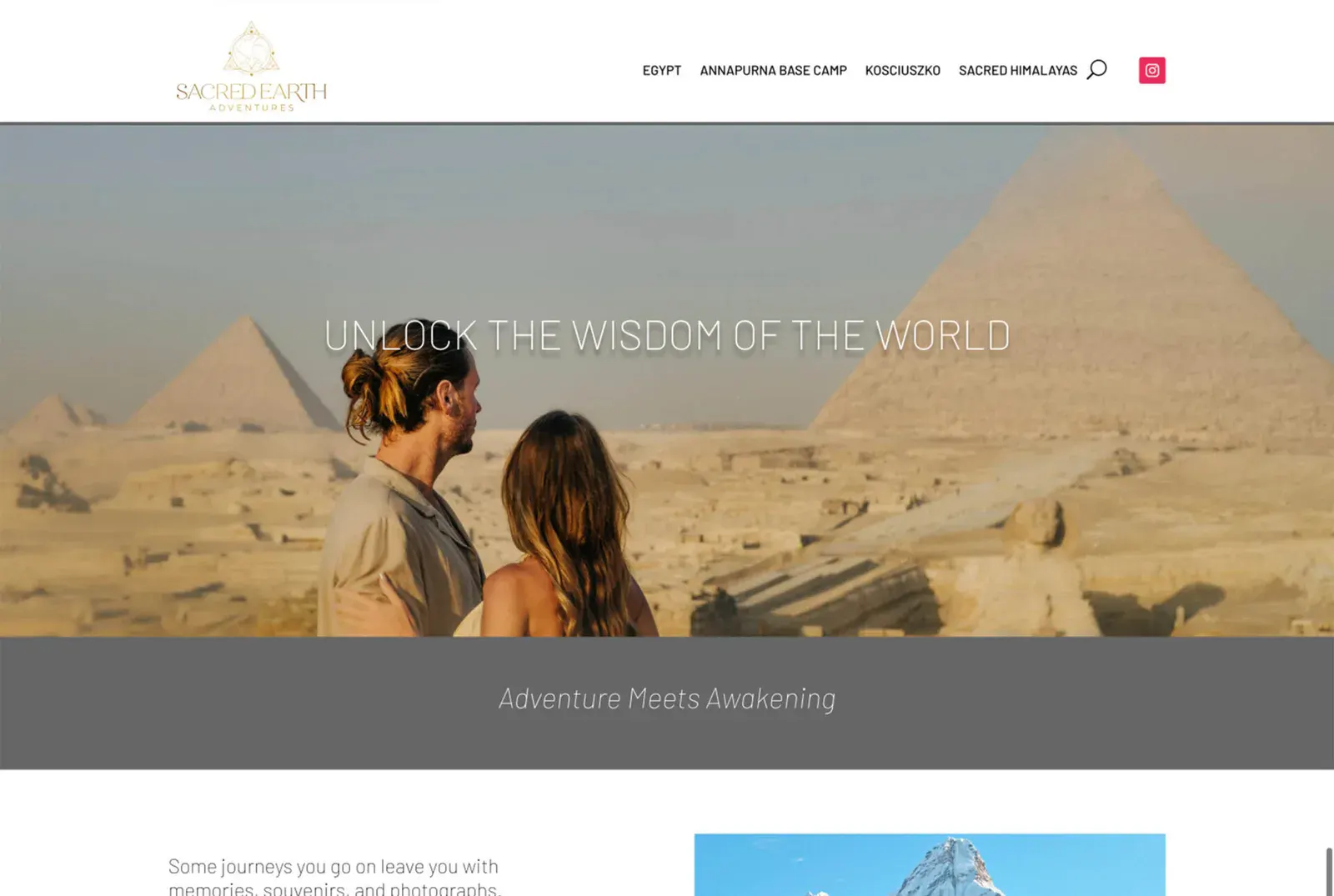
The previous site did the operational job: it listed the trips and told visitors what to expect. It did not do much else.
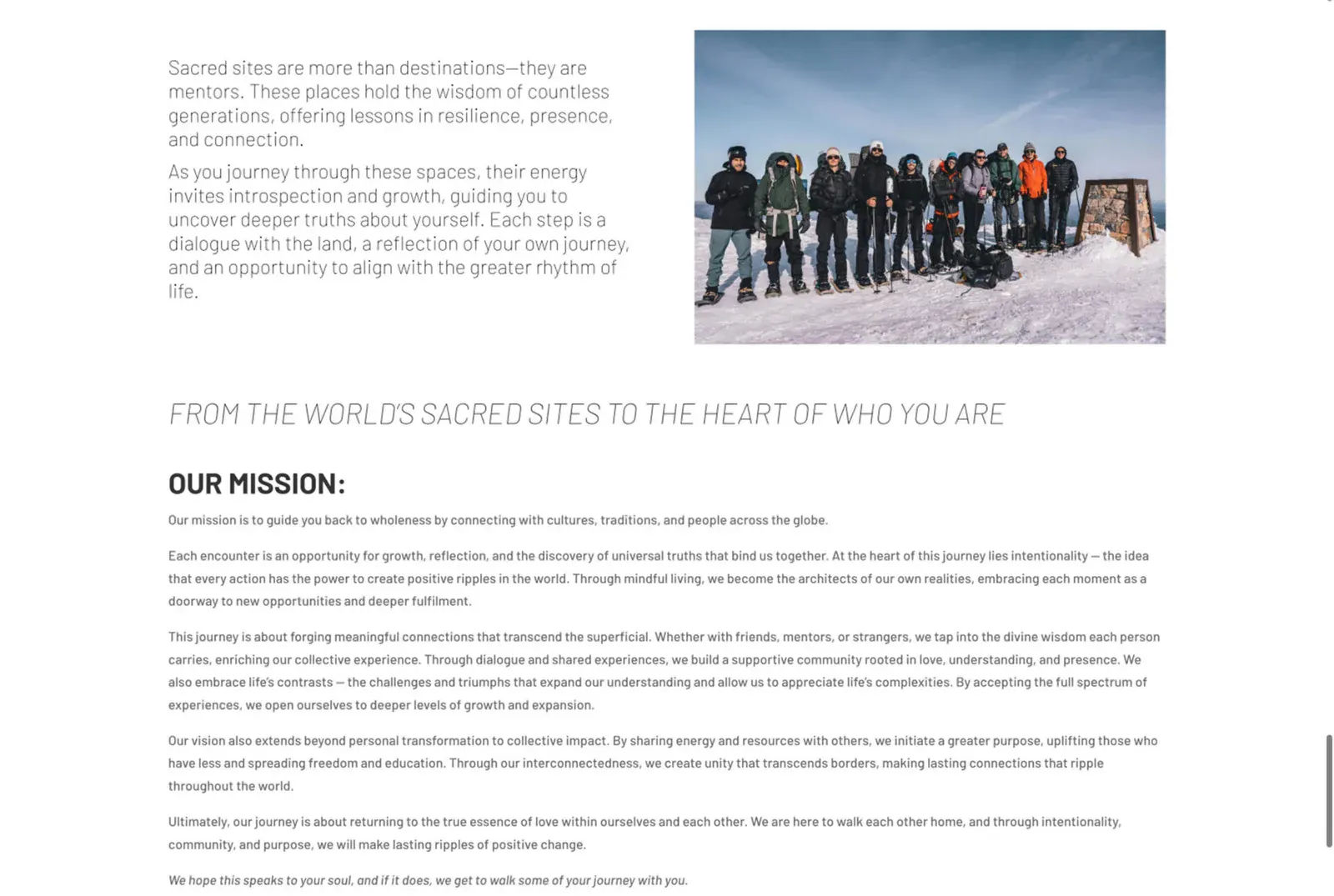
A flat, four-item menu carried the whole list of trips. The page that explains why the founders do this work ran as five unbroken paragraphs next to one photo, and none of it adapted for a visitor on a phone.
What we saw
Nothing made for a phone
The layout did not adapt to a phone, so a visitor on one met the desktop page, shrunk.
No page per trip
Most trips had no page of their own to link from an email, an ad or a social post.
An architecture that overwhelmed
Instead of guiding a visitor toward one decision, the site put every destination and every tier in front of them at once.
A story with no pacing
The story was already there. The interface gave it no rhythm, so it arrived as one long block instead of a sequence a visitor could follow.
The plan
The goal was a site that felt like the trips themselves: unhurried, and honest about what the work is.
Emotional clarity came first, so every page says plainly what a visitor will get. Next came the flow of decisions, how someone moves from curious to ready to book. The architecture came last, built to carry both trust and wonder on every page.
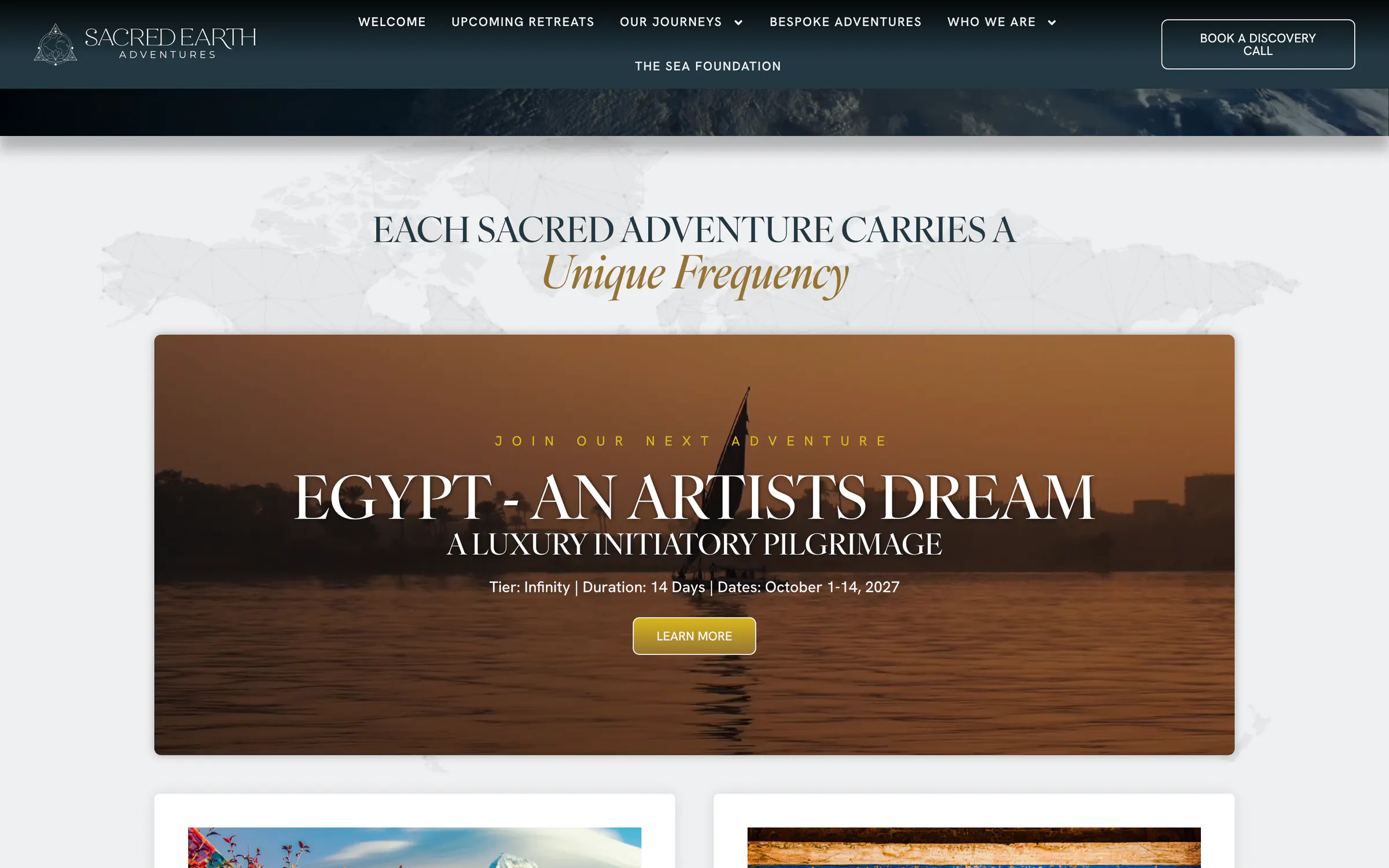
(What we built)
What we built
The redesign gave every destination its own page and rebuilt the site to hold up on a phone, a tablet and a desktop.
A page built for every trip
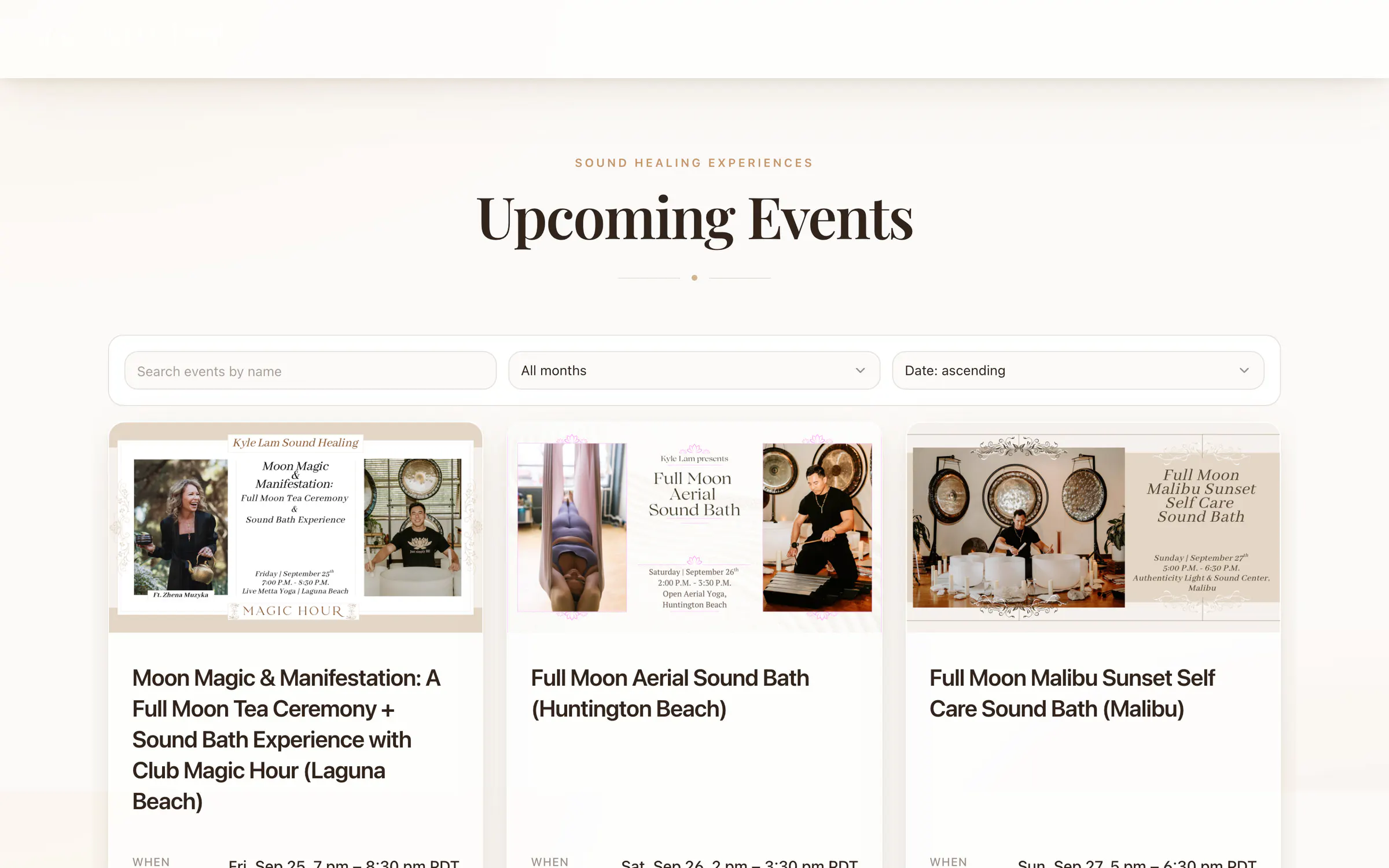
Every destination now has its own page, and the most requested trips have campaign variants built for email, paid media and social. A filter for destination, year and tier helps a visitor find the right trip without reading through all of them.
The heavy blocks of text that used to carry the whole story on one page became paced sections with clear visual anchors, so the depth that was always there finally sets the rhythm instead of arriving all at once.
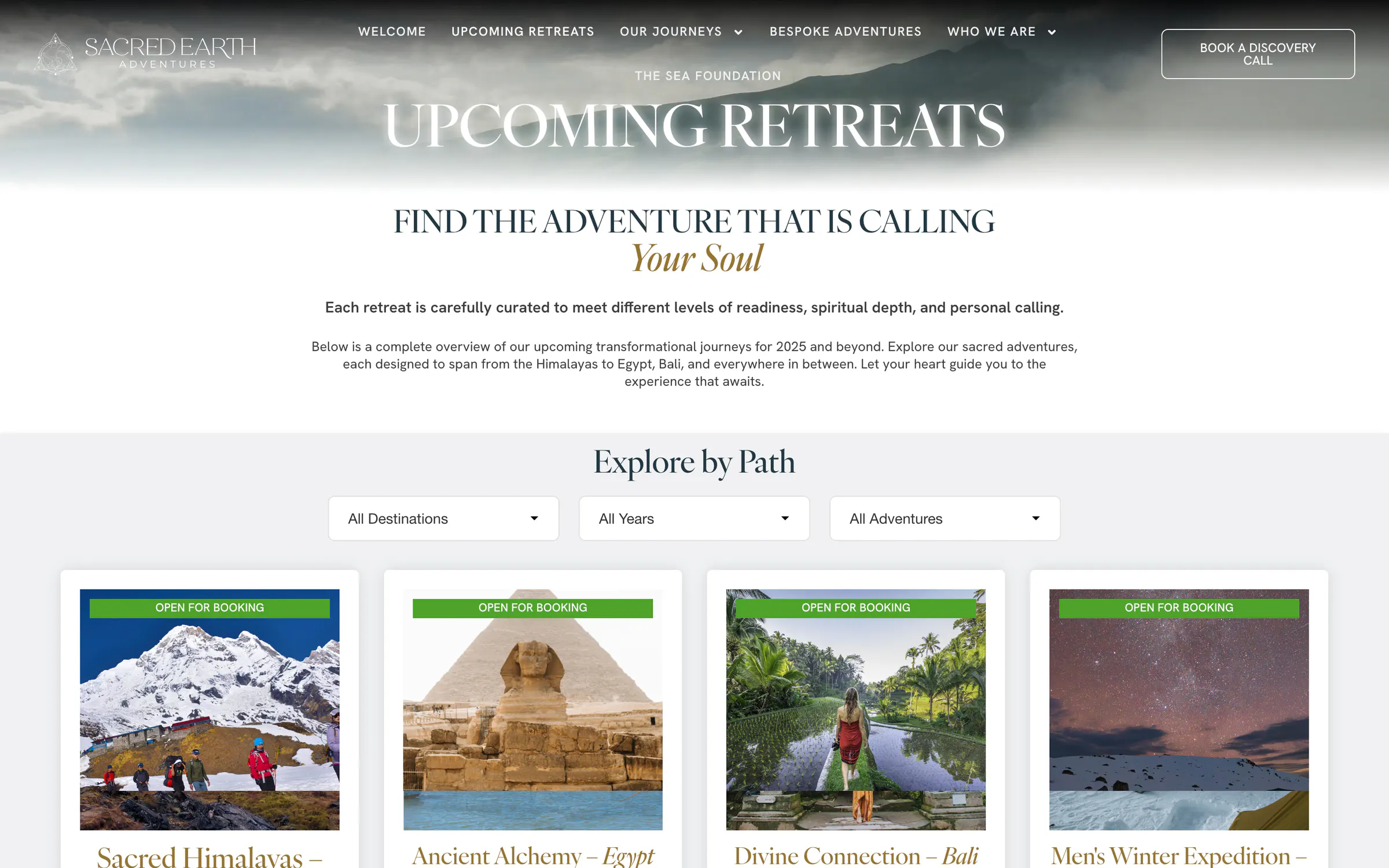
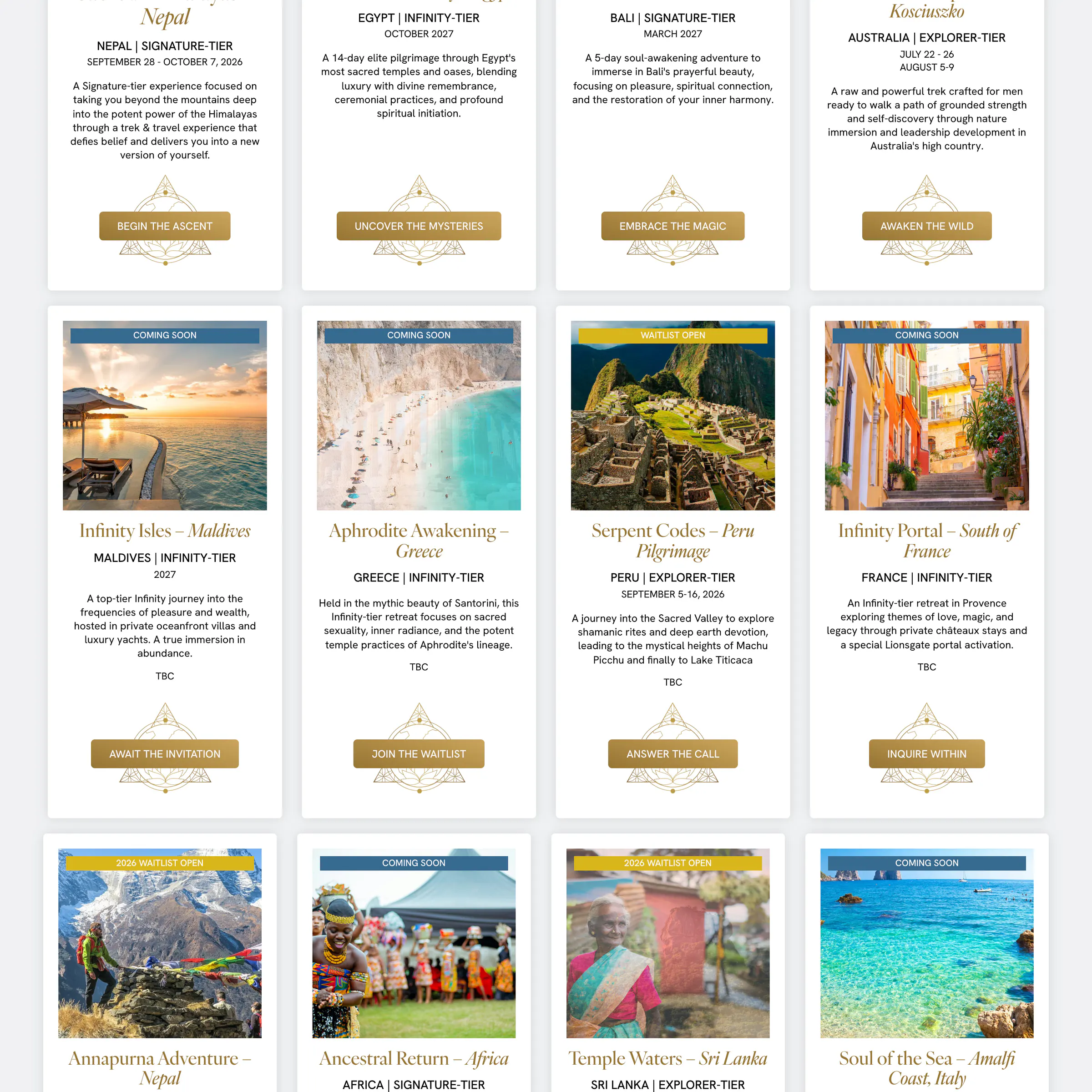
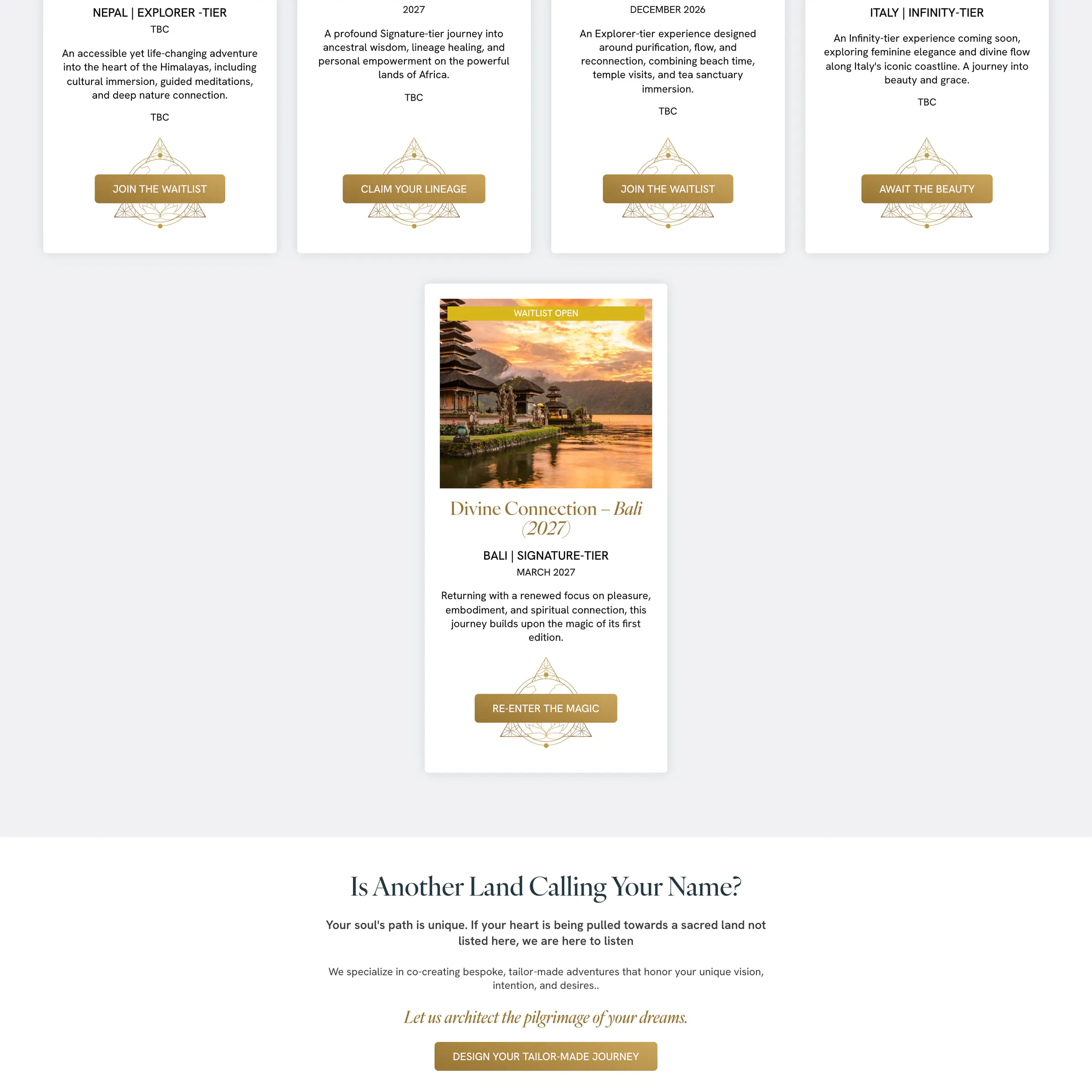
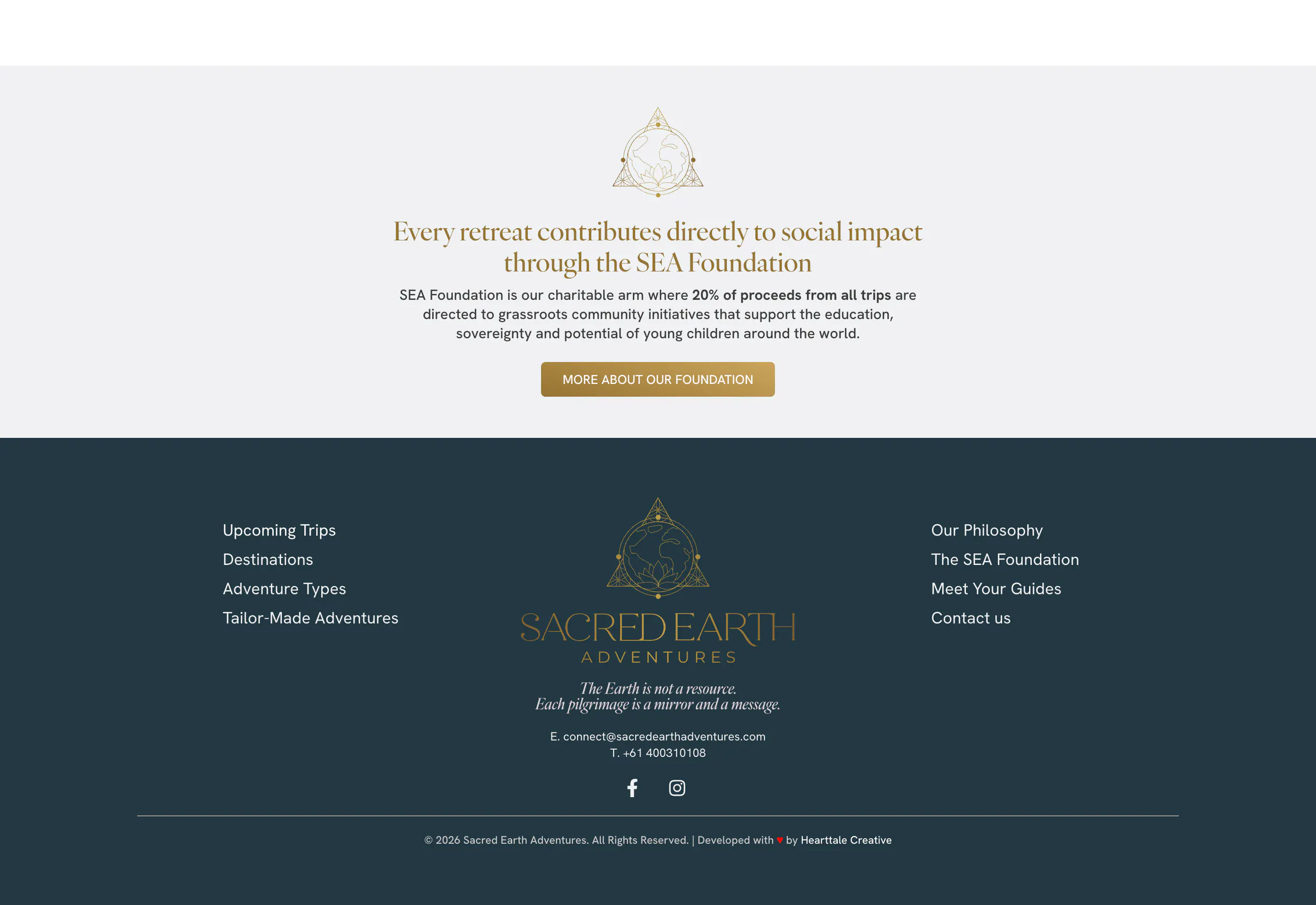
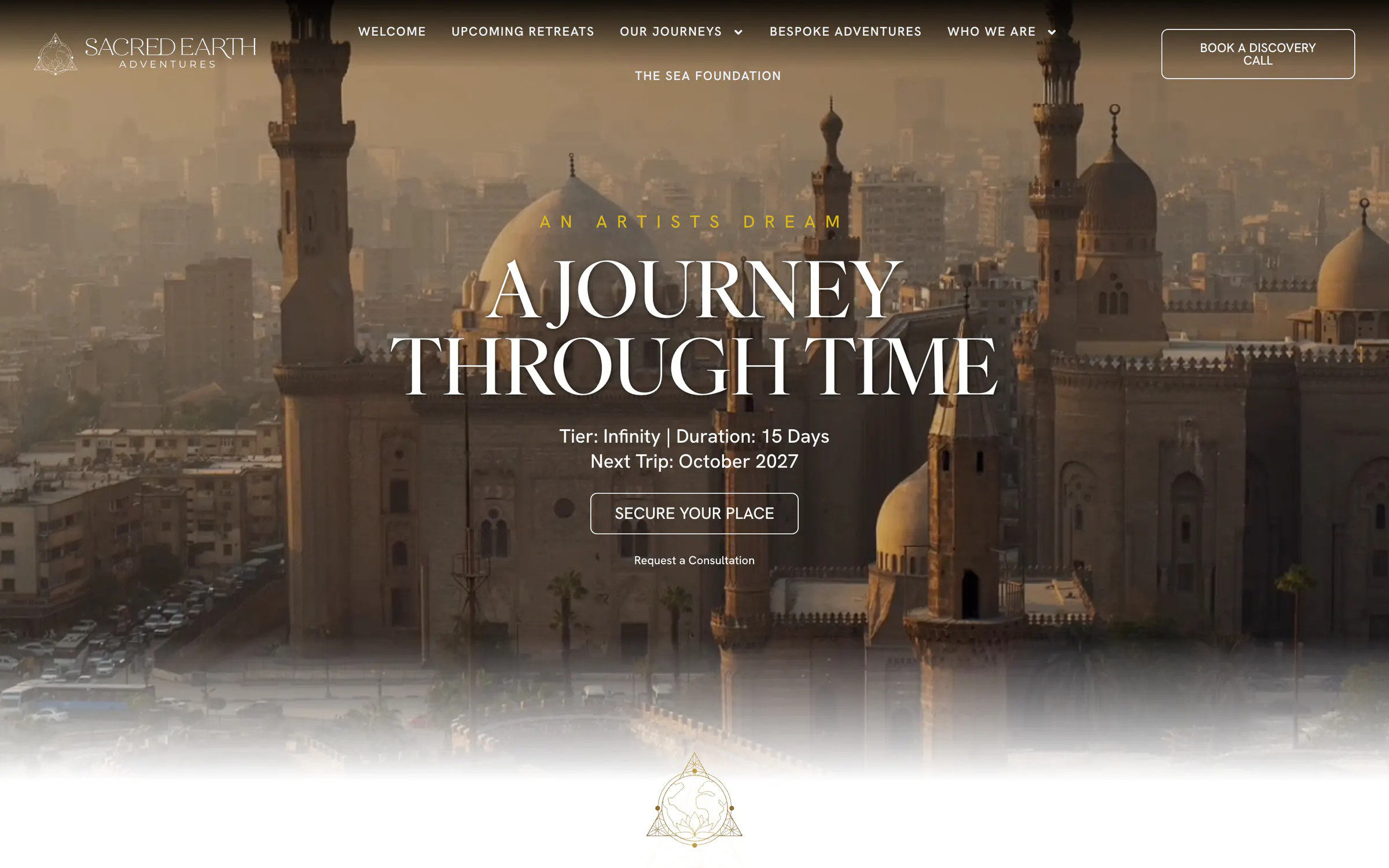
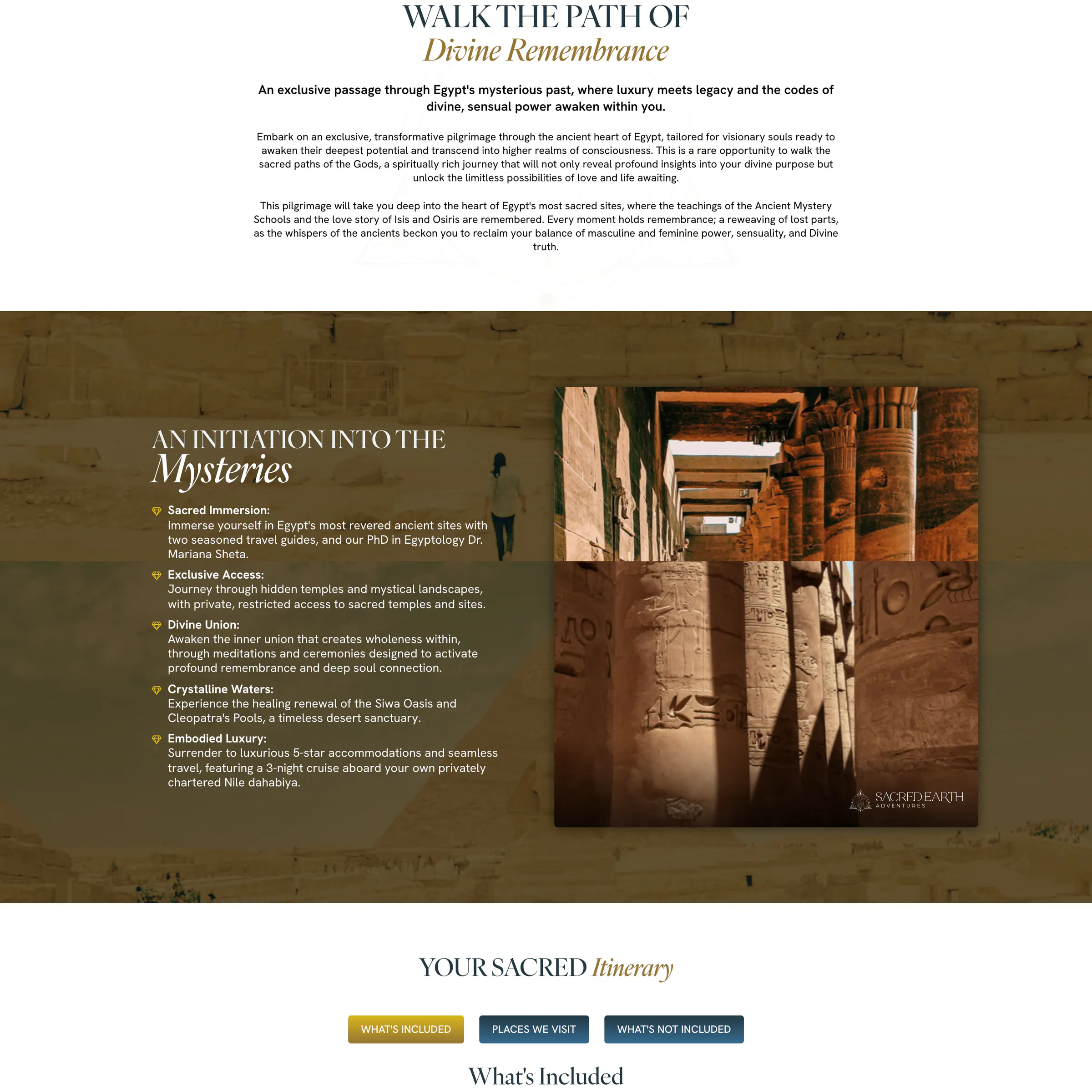
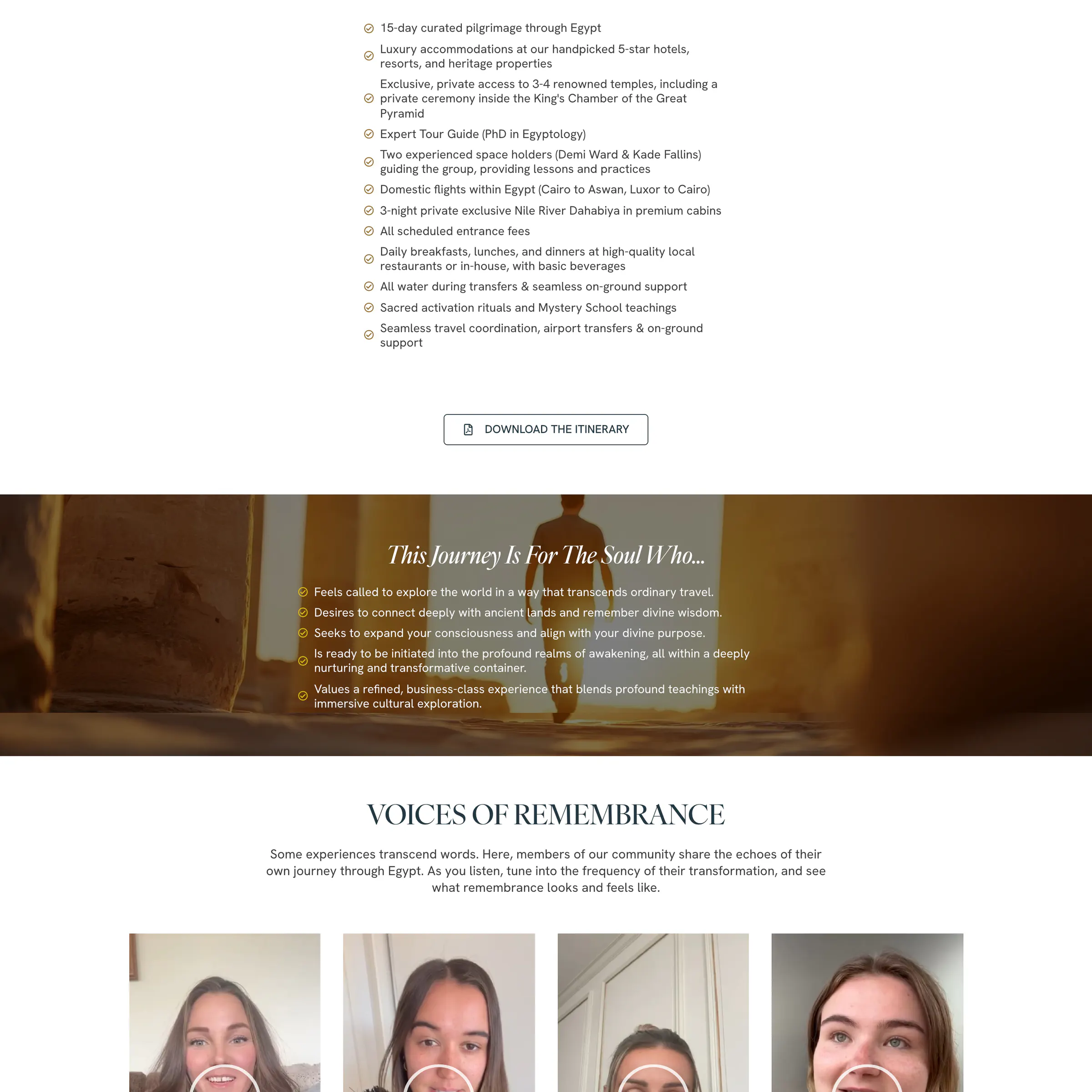
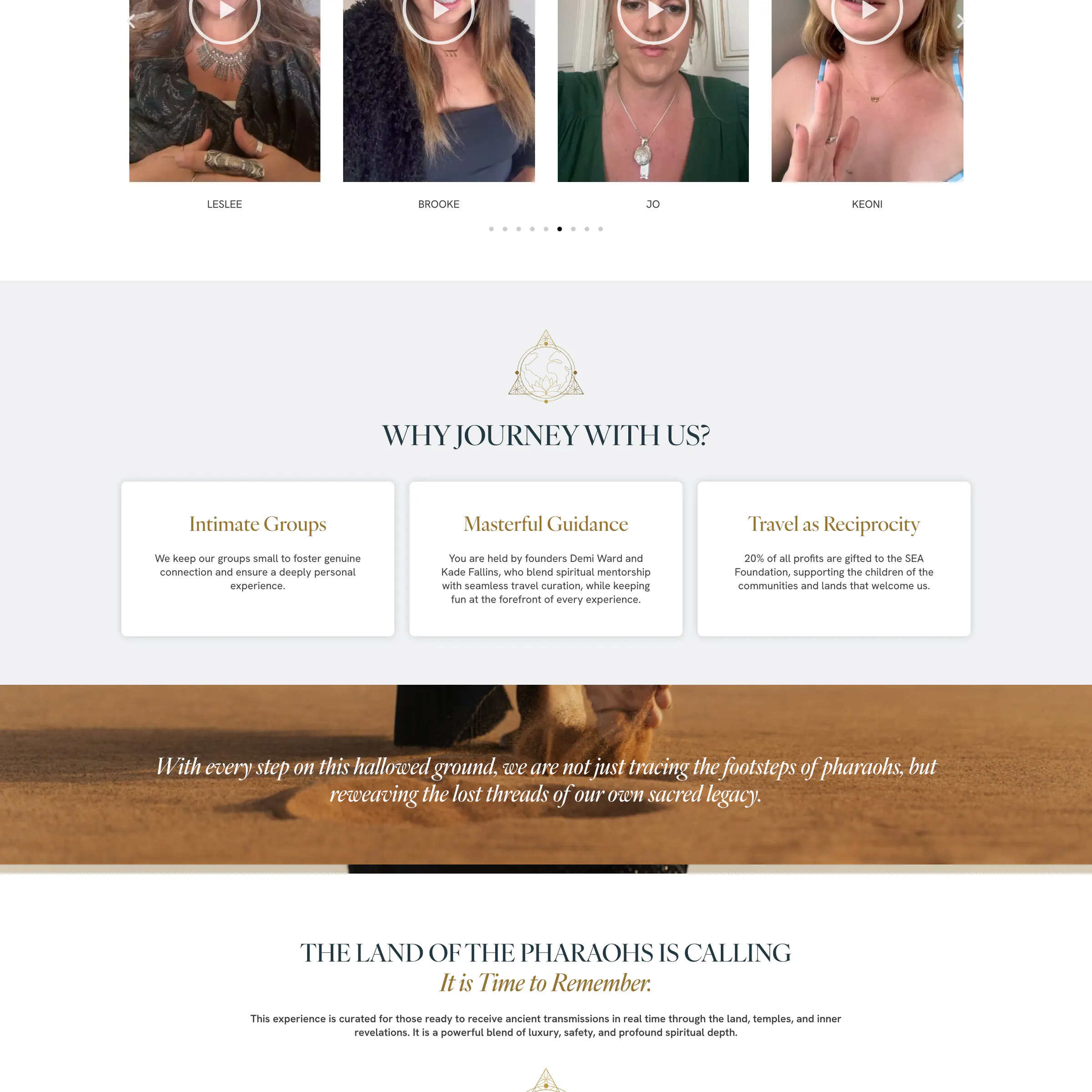
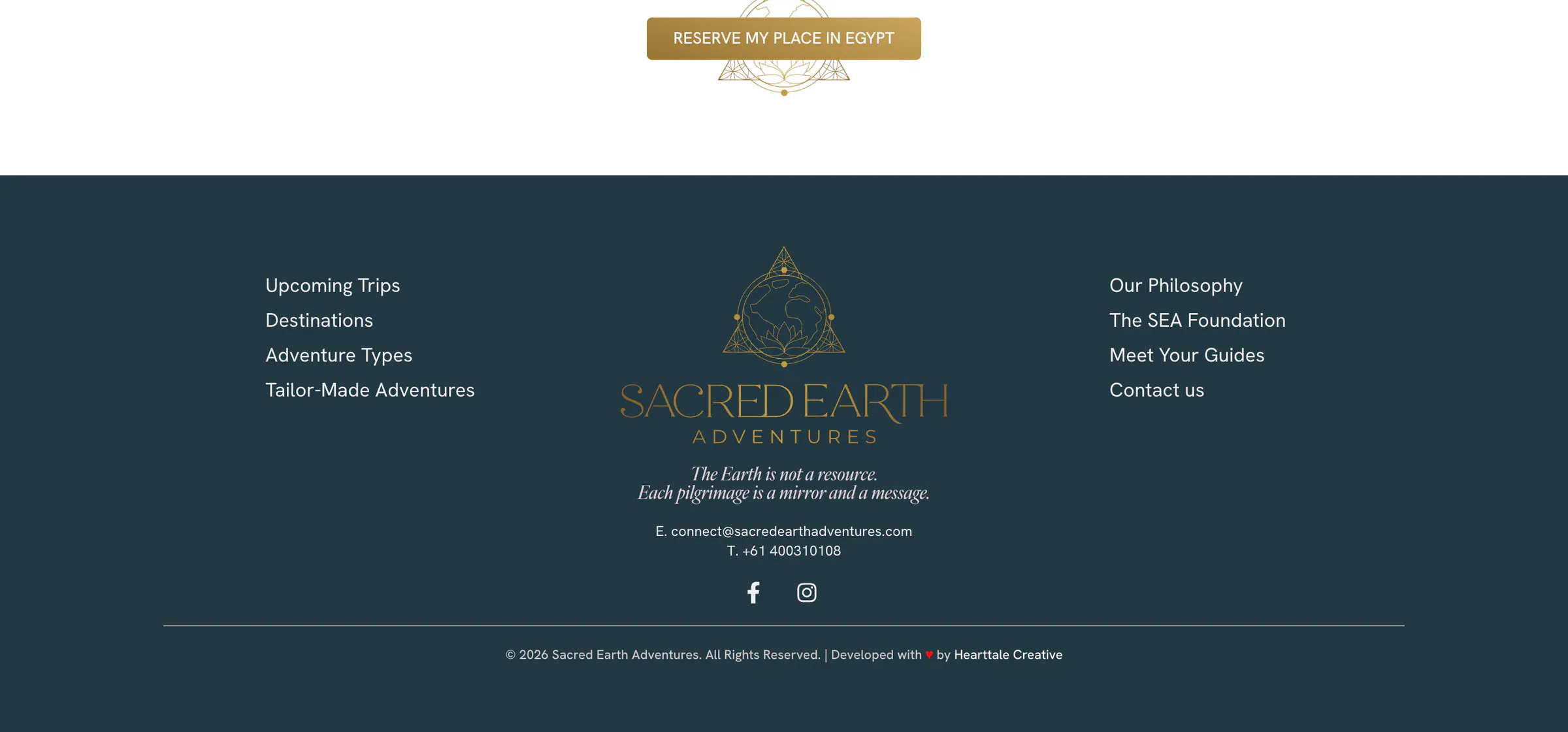
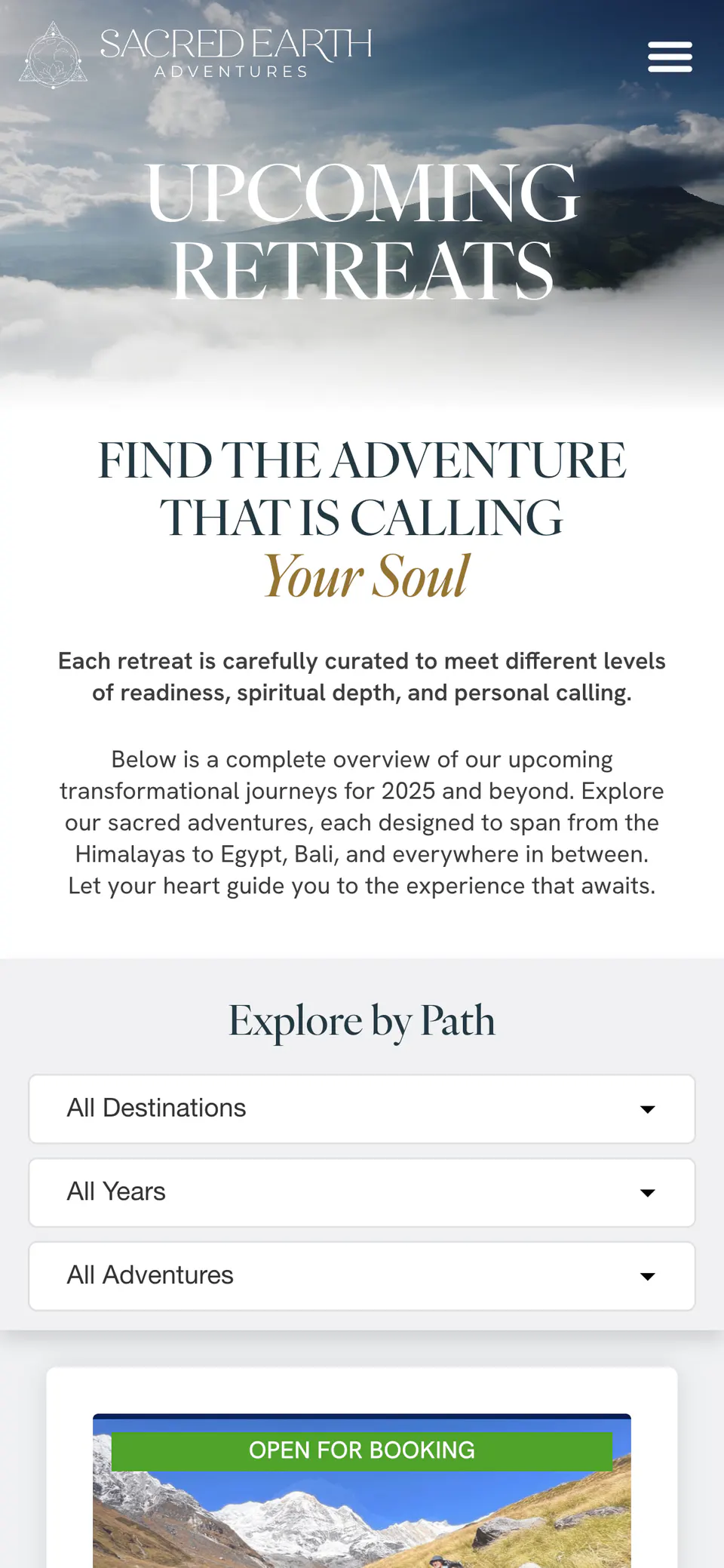
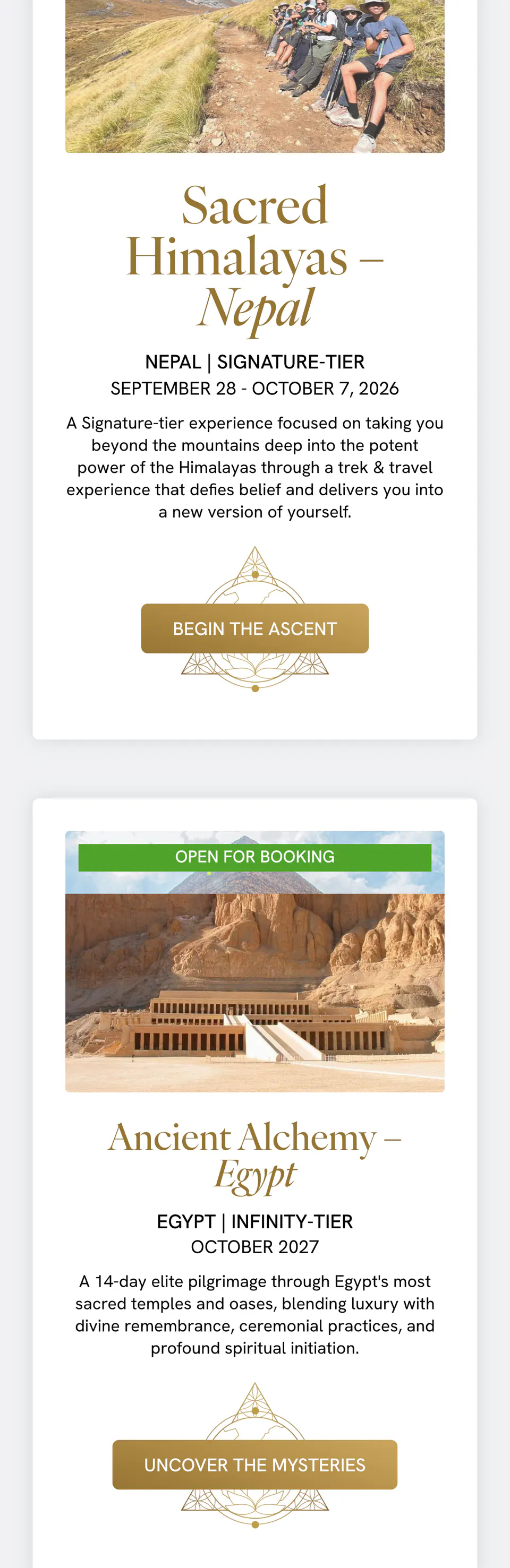
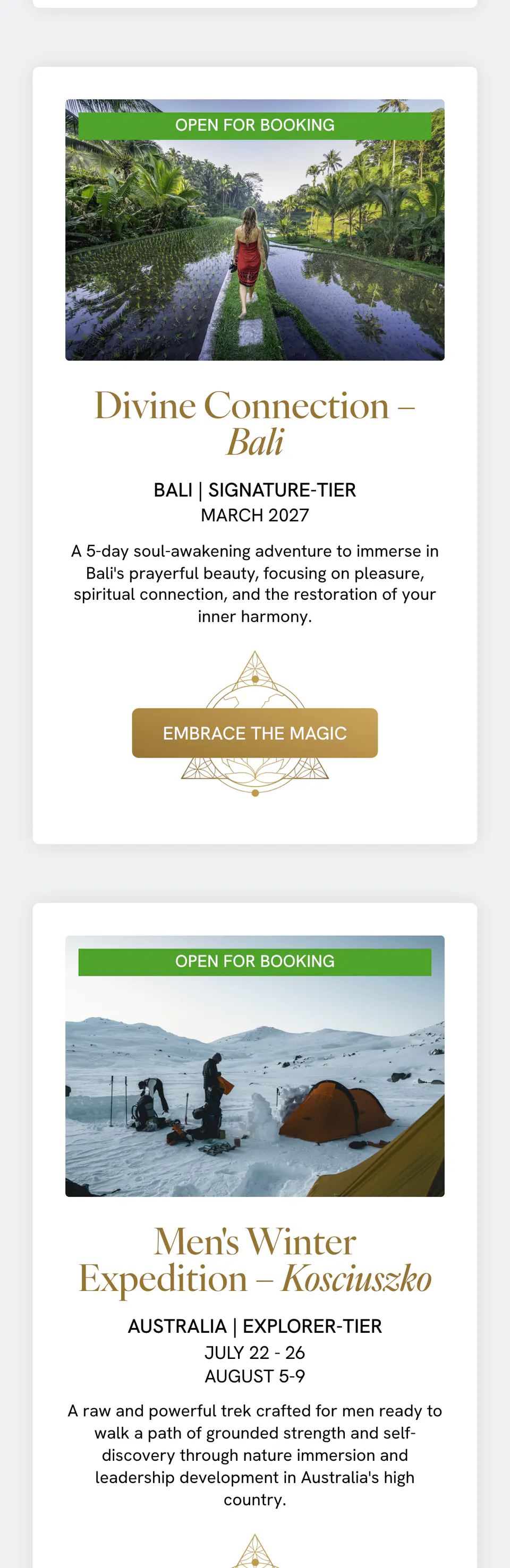
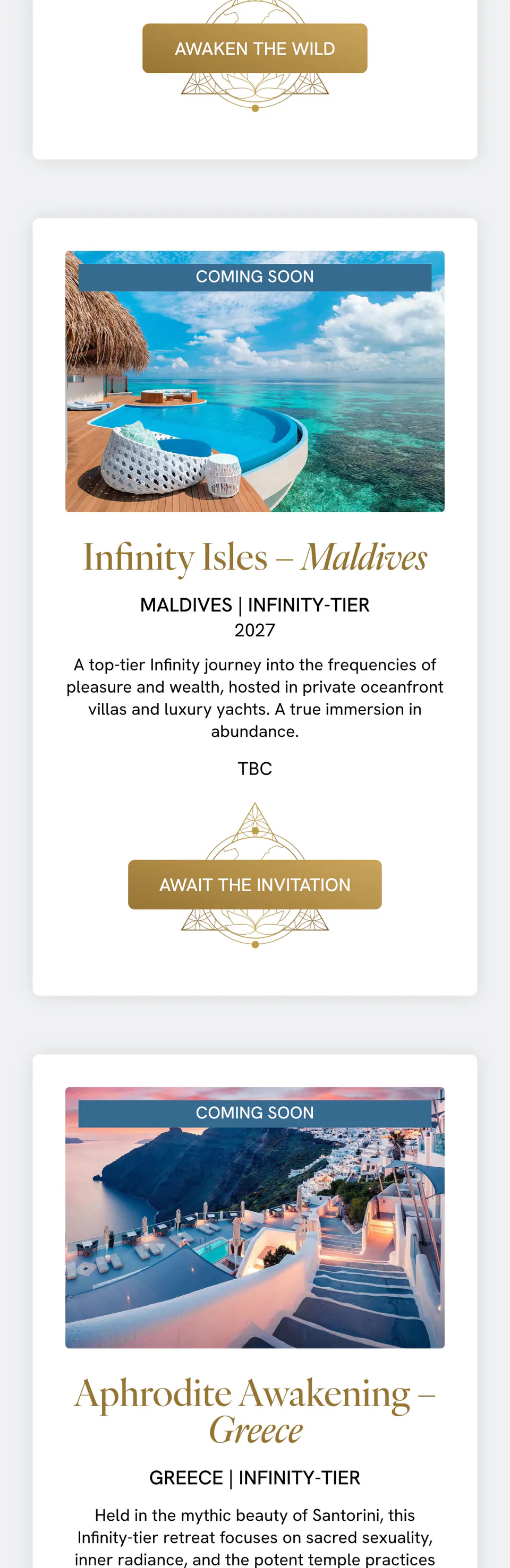
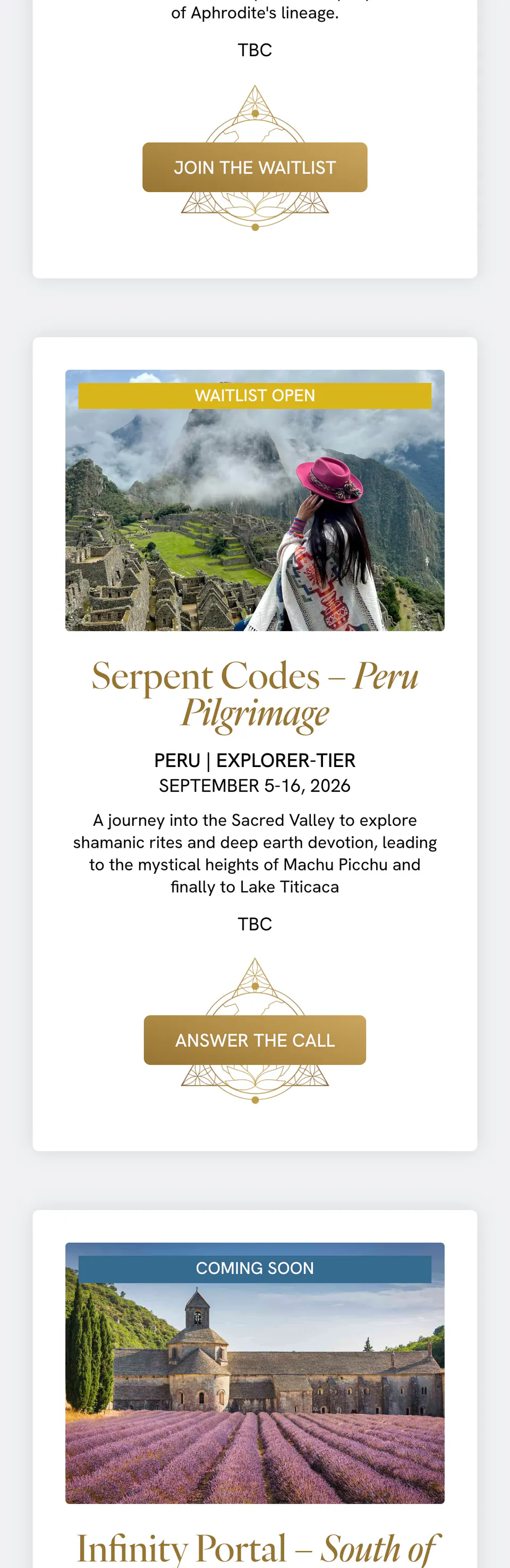
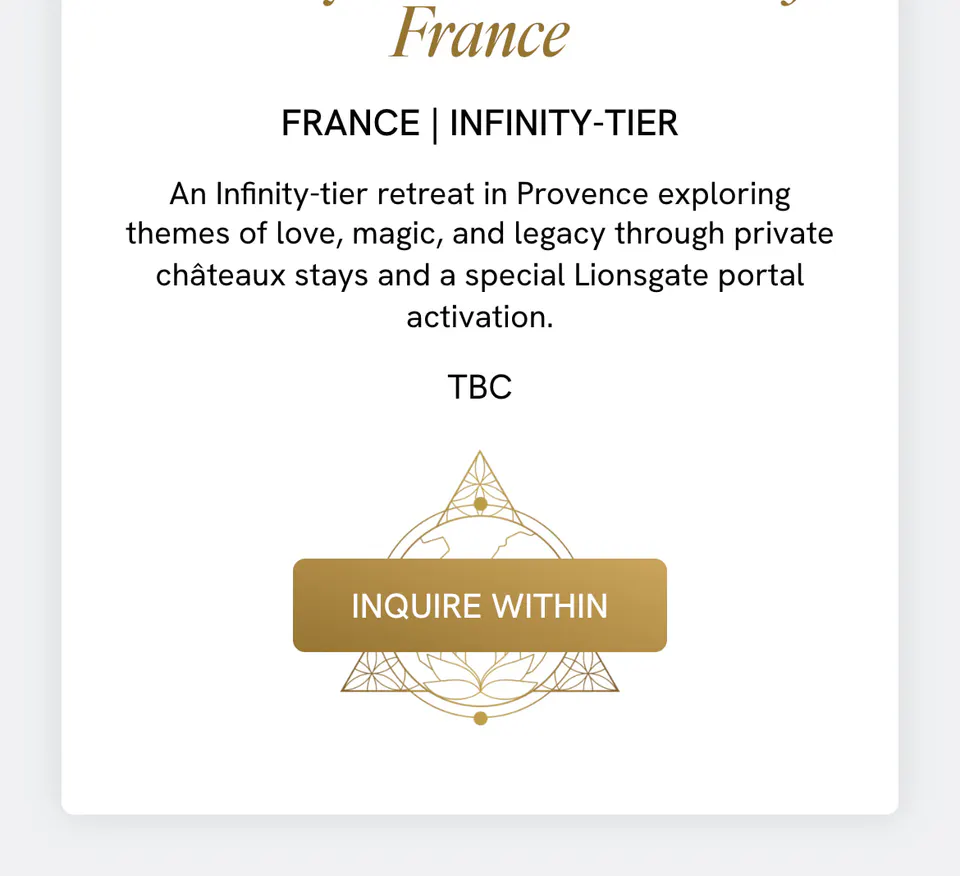
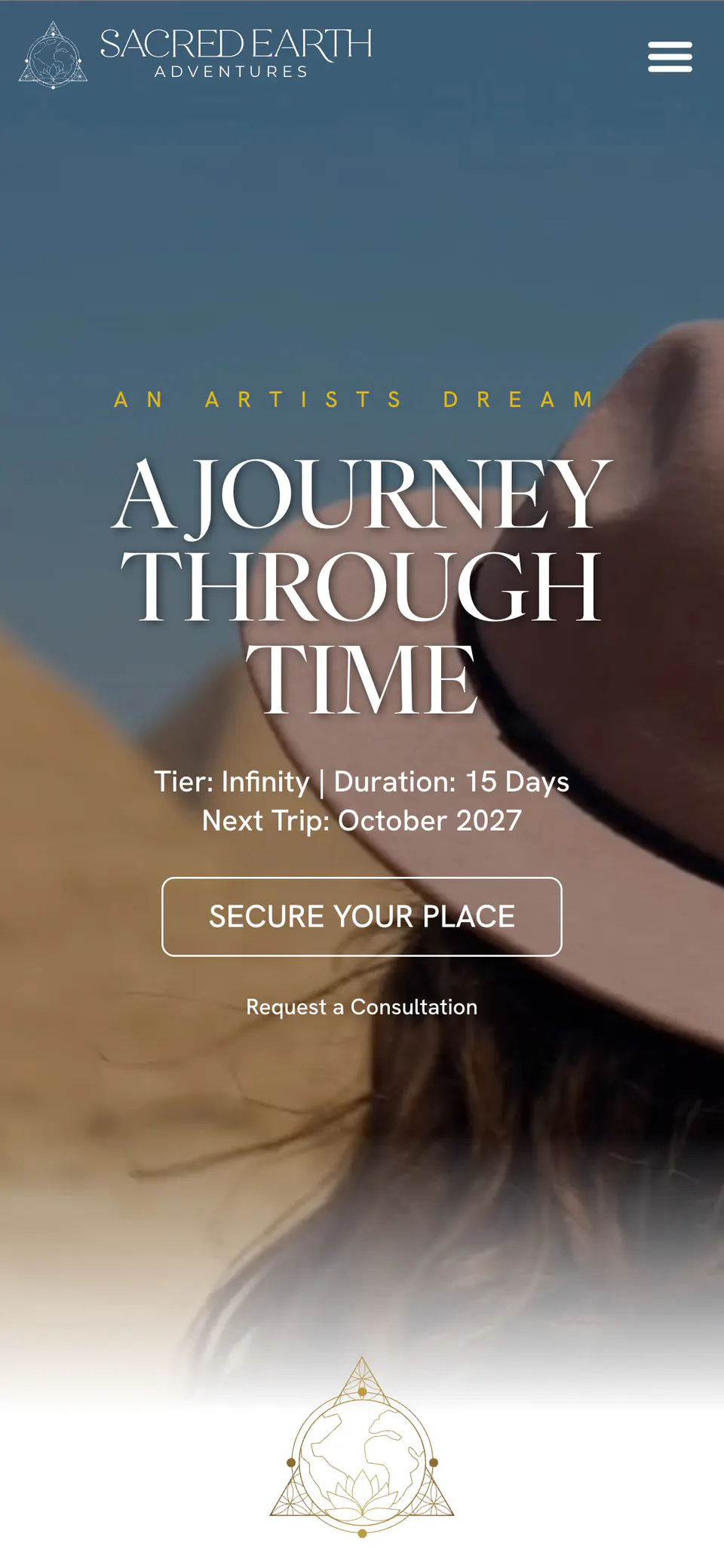
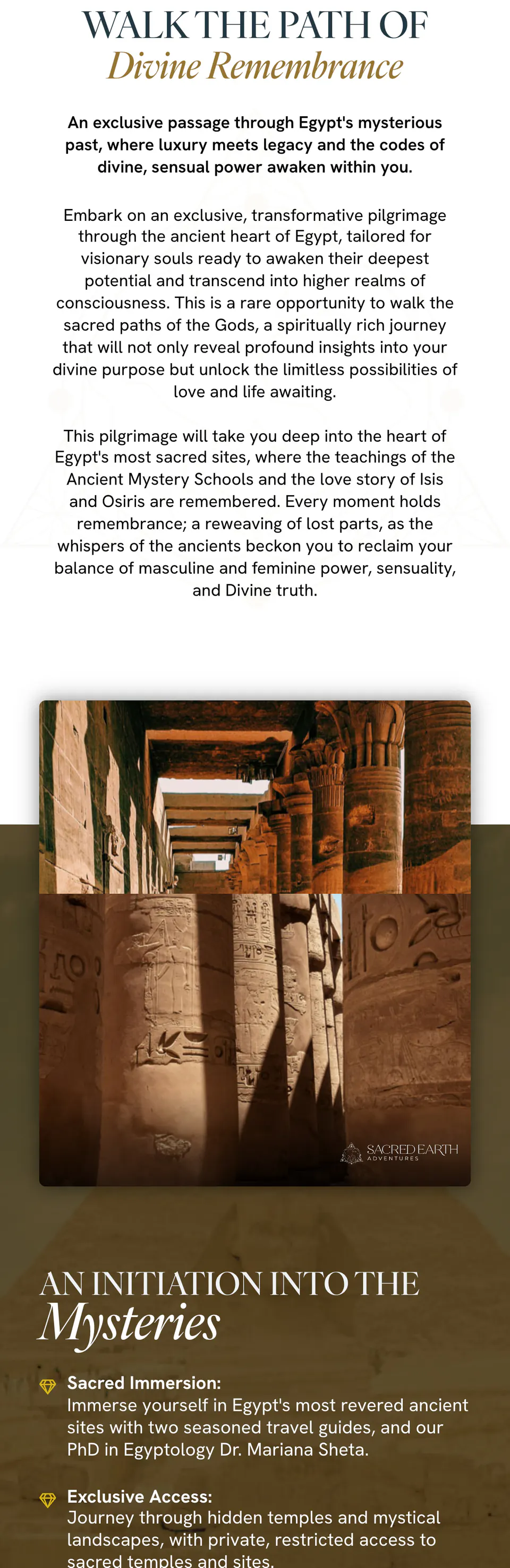
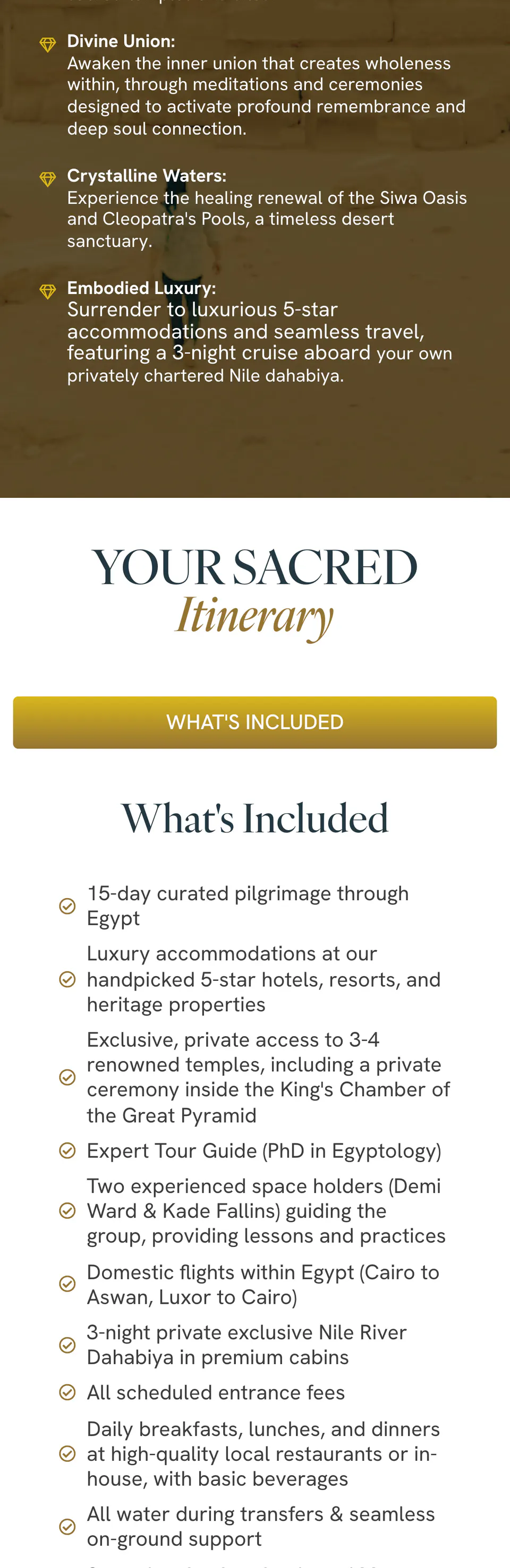
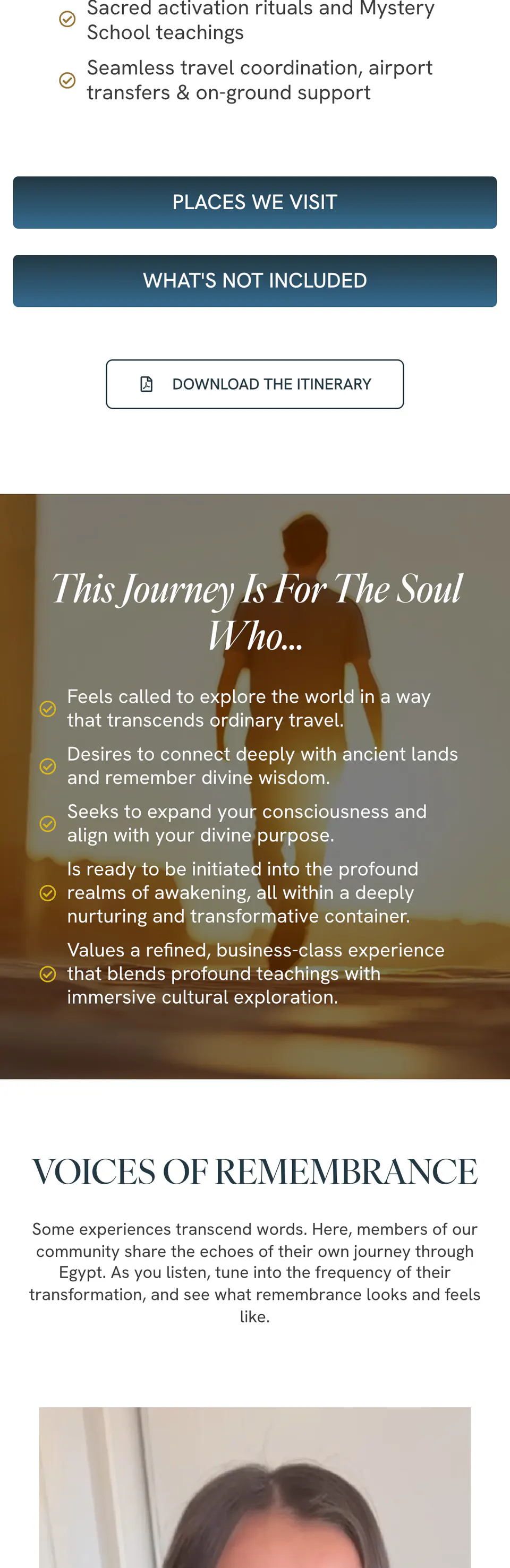
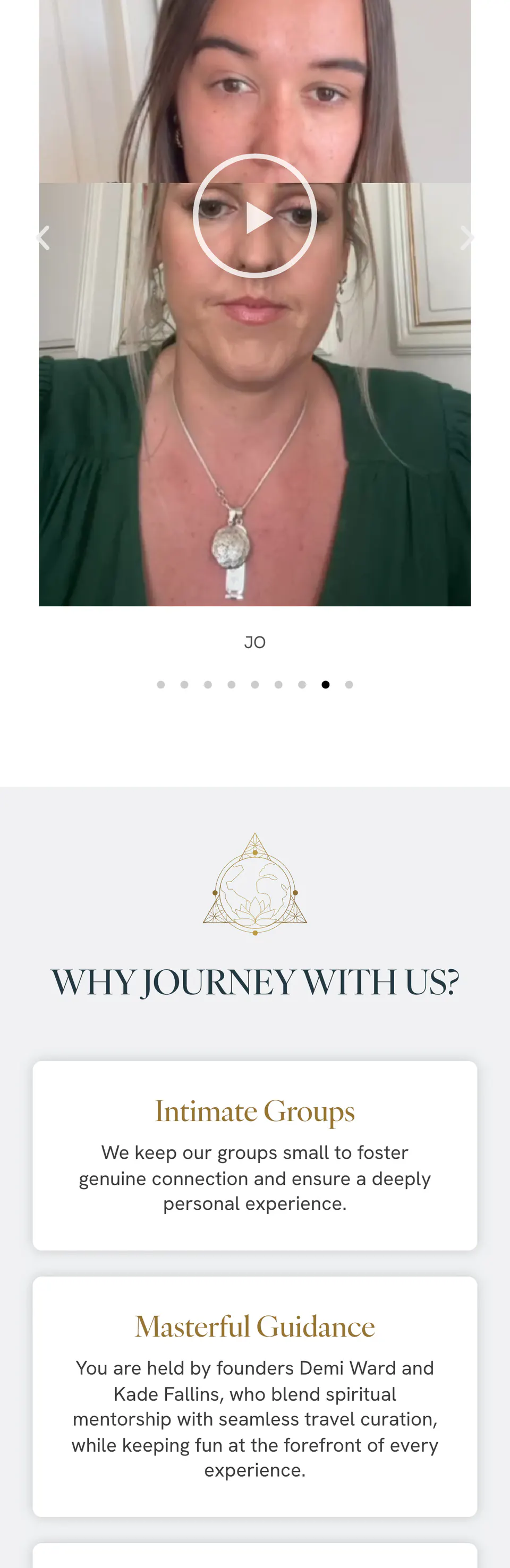
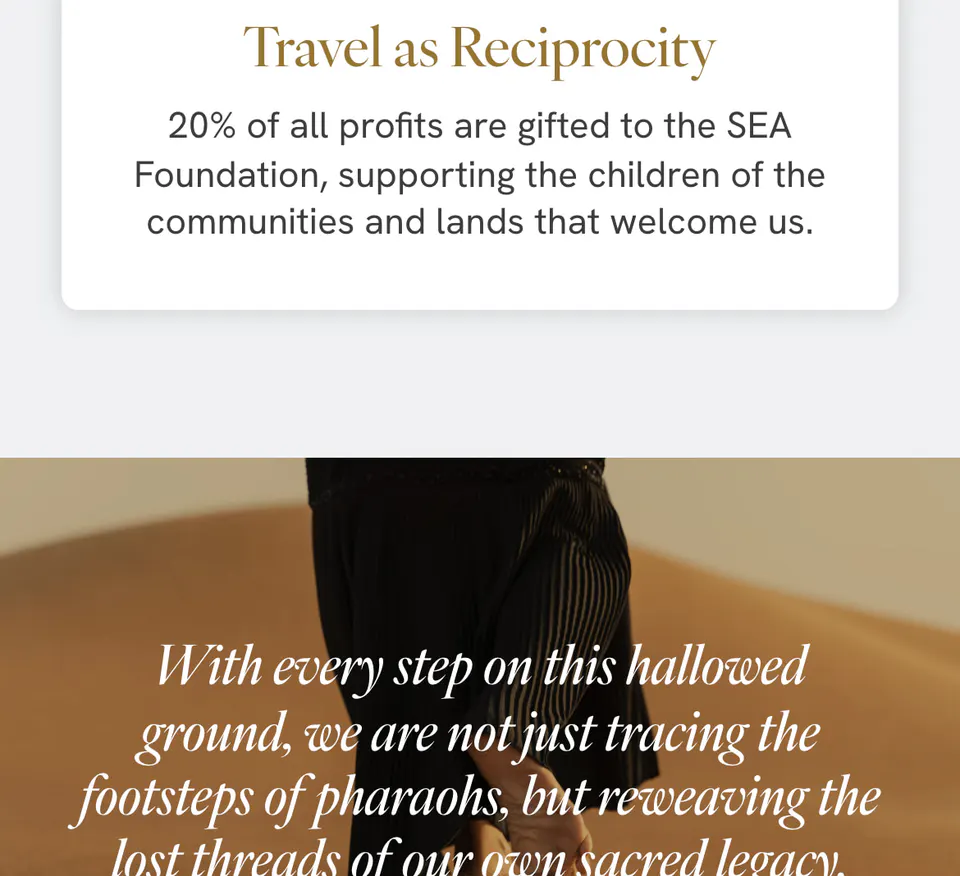
- A dedicated page for every destination, with campaign variants for the most requested trips.
- A working filter for destination, year and tier.
- Layouts rebuilt to hold up on a phone, a tablet and a desktop.
- Heavy text turned into paced sections with clear visual anchors.
- One voice across every destination page.
(The result)
Result
Every trip Sacred Earth Adventures sells now has a page built to sell it.
The new site reads like Sacred Earth Adventures, spacious and close to how the founders actually talk. Every destination now has a page that can be shared, promoted and linked from email, paid media and social, on an architecture built so a new destination can join without breaking the rest.
- A flat menu became a clear path with a next step on every page.
- Trips that were hard to promote each have a campaign-ready page now.
- A depth that the interface used to hide now sets the pace of the story.
- A structure that resisted new destinations now has room built in for them.
For the first time, our website feels like us. People now understand our journeys before they even speak with us.Demi and Kade, founders of Sacred Earth Adventures
Services on this project
Have a project in mind?
hello@hearttalecreative.comOr use the form: three questions, two minutes. Start a project.