Kyle Lam Events
From scattered tools to one platform for events, tickets and trainings.
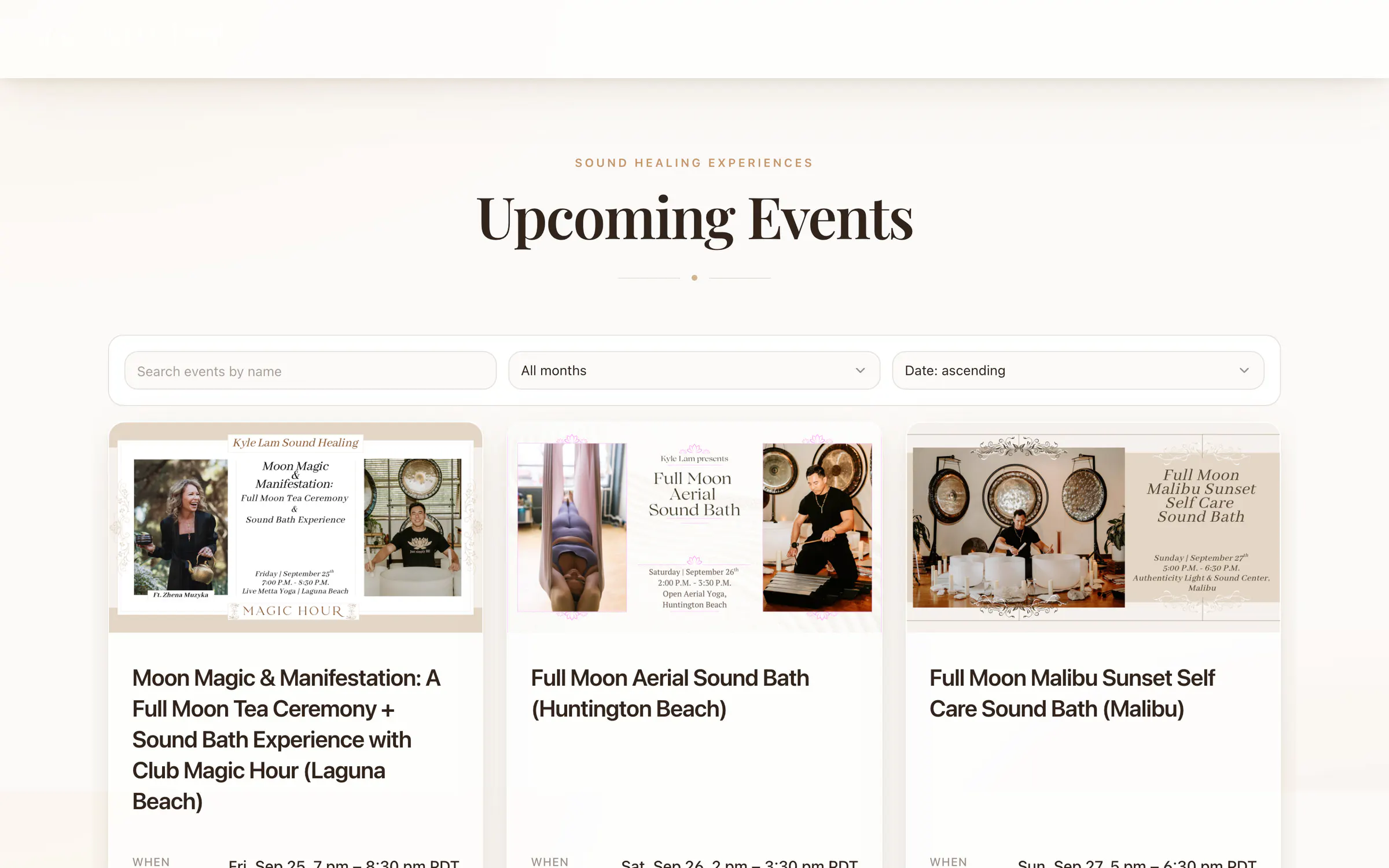
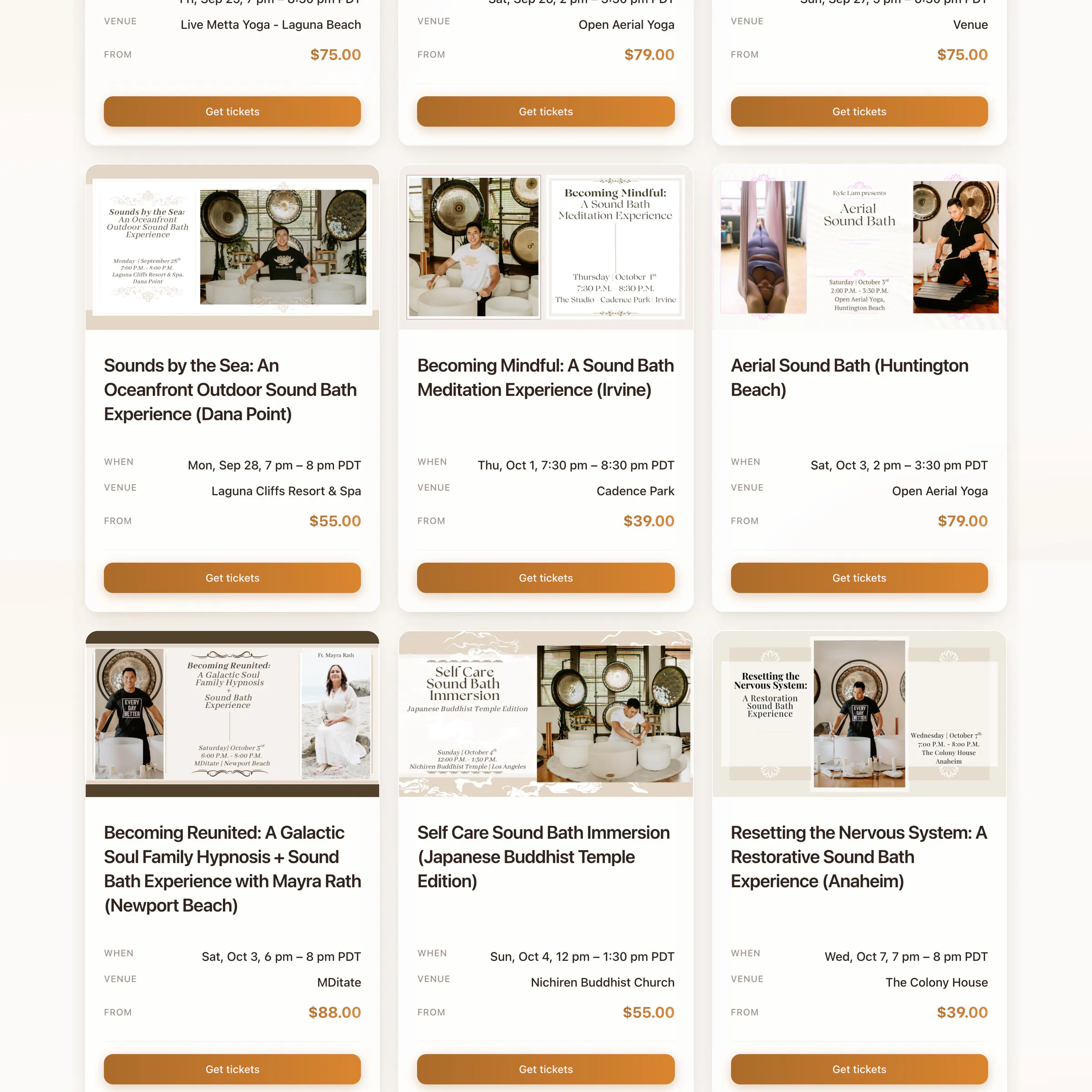
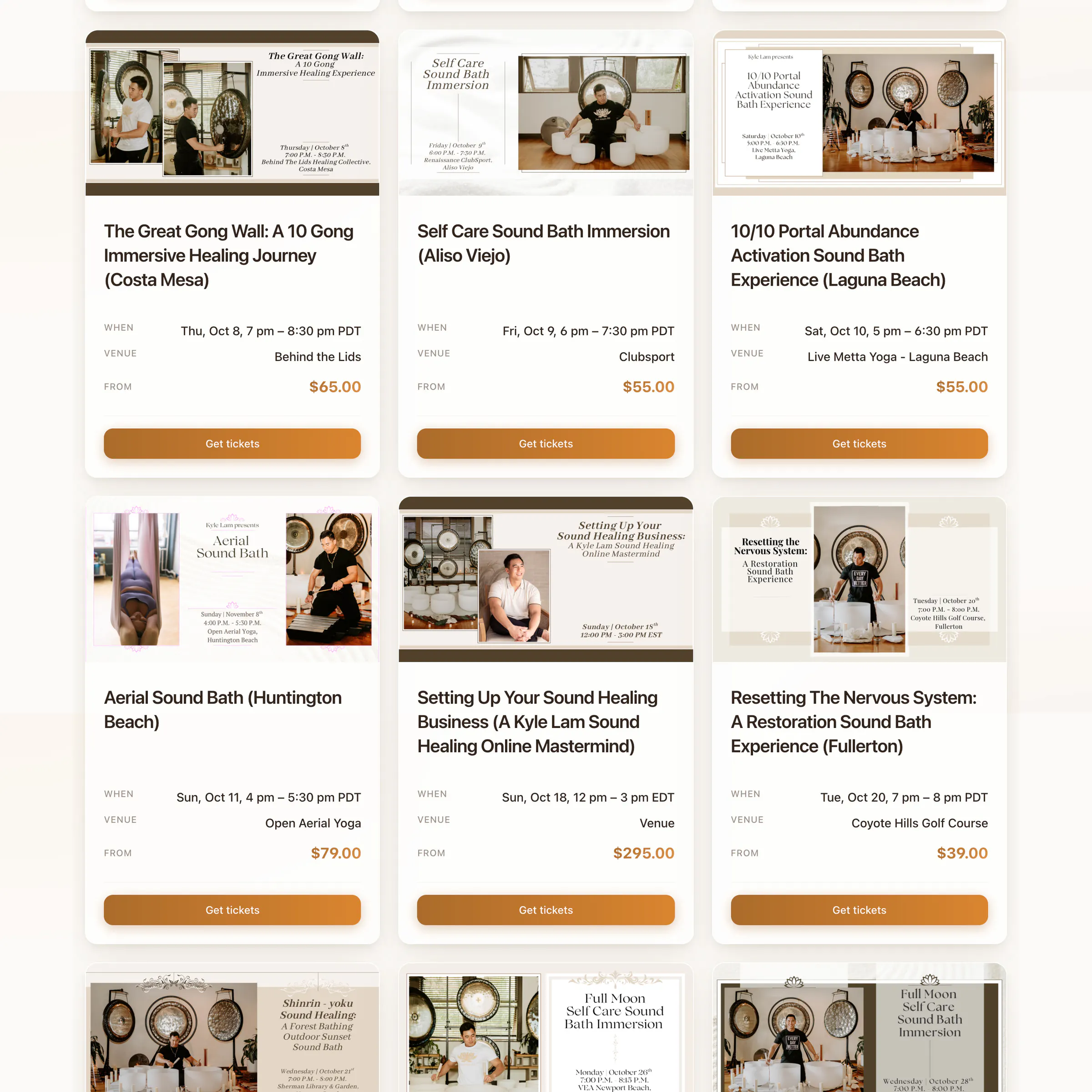
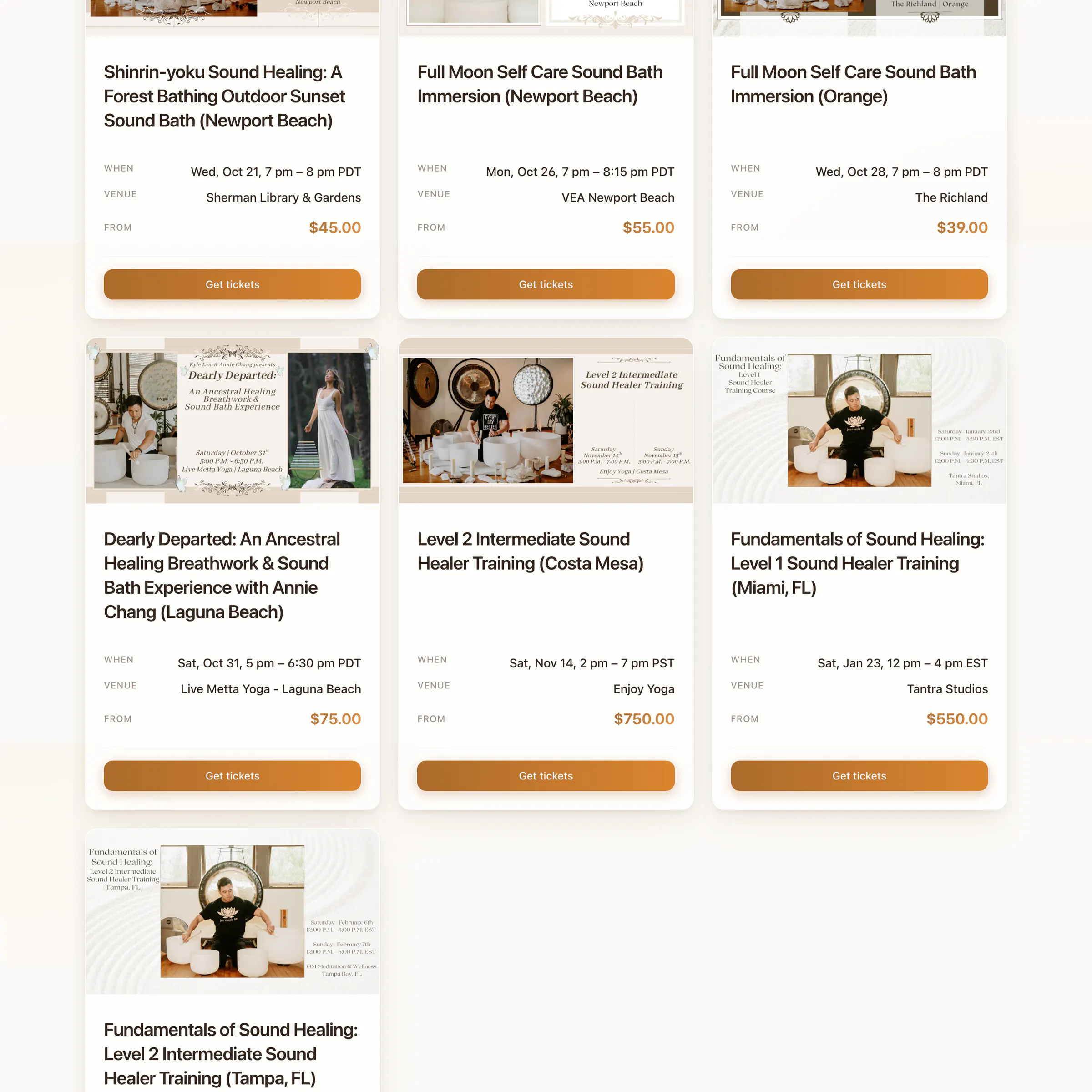
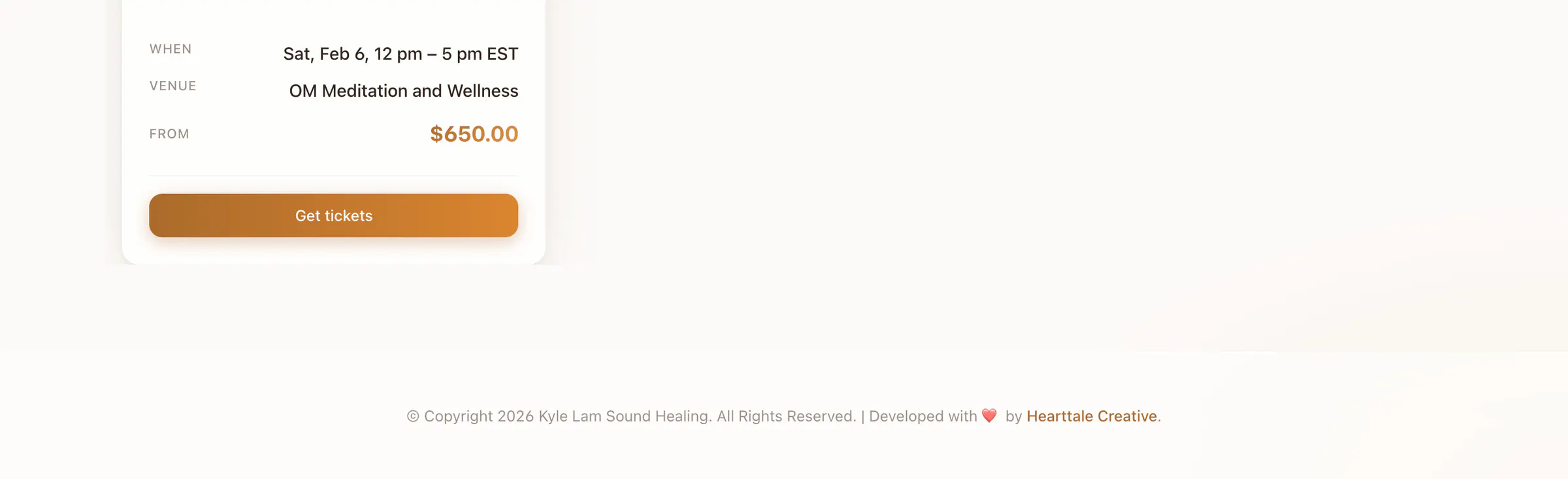
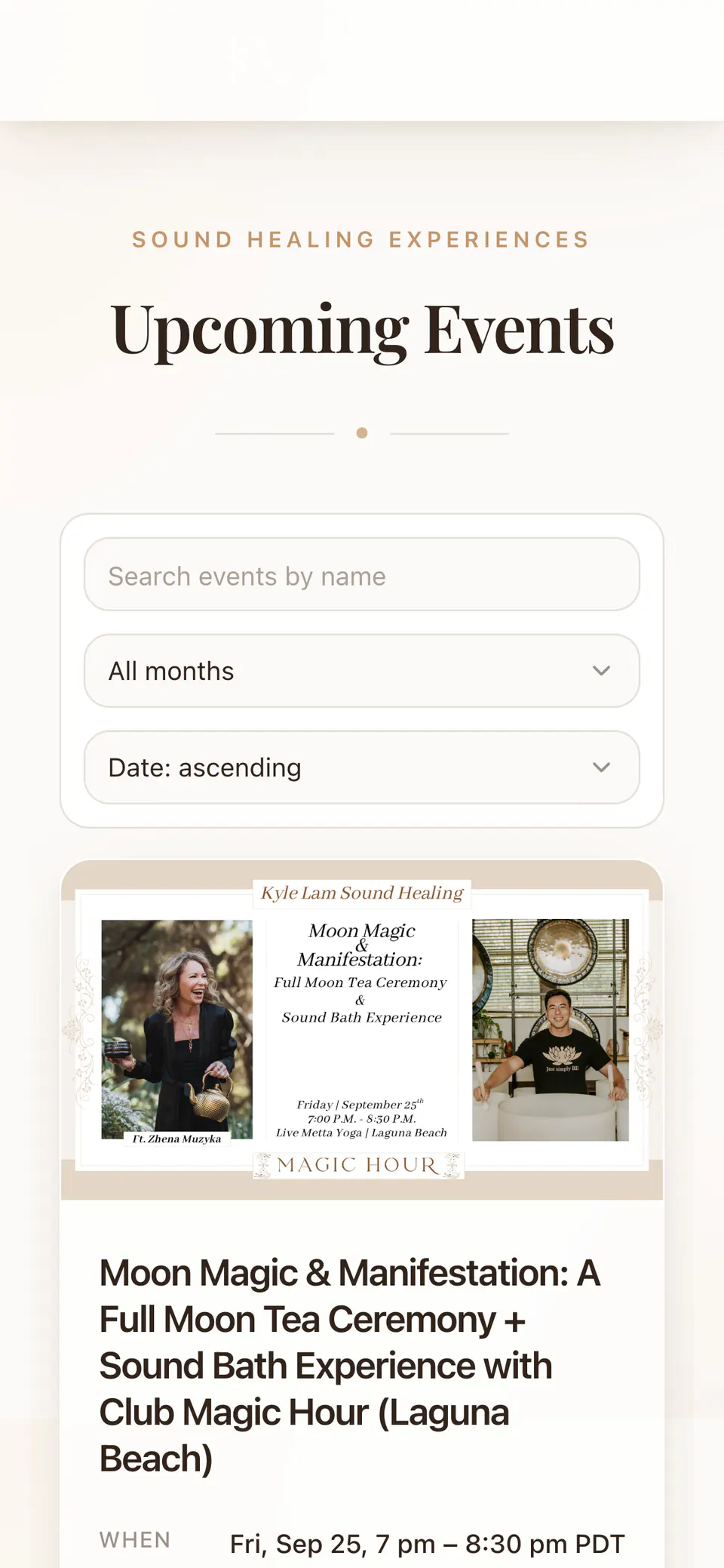
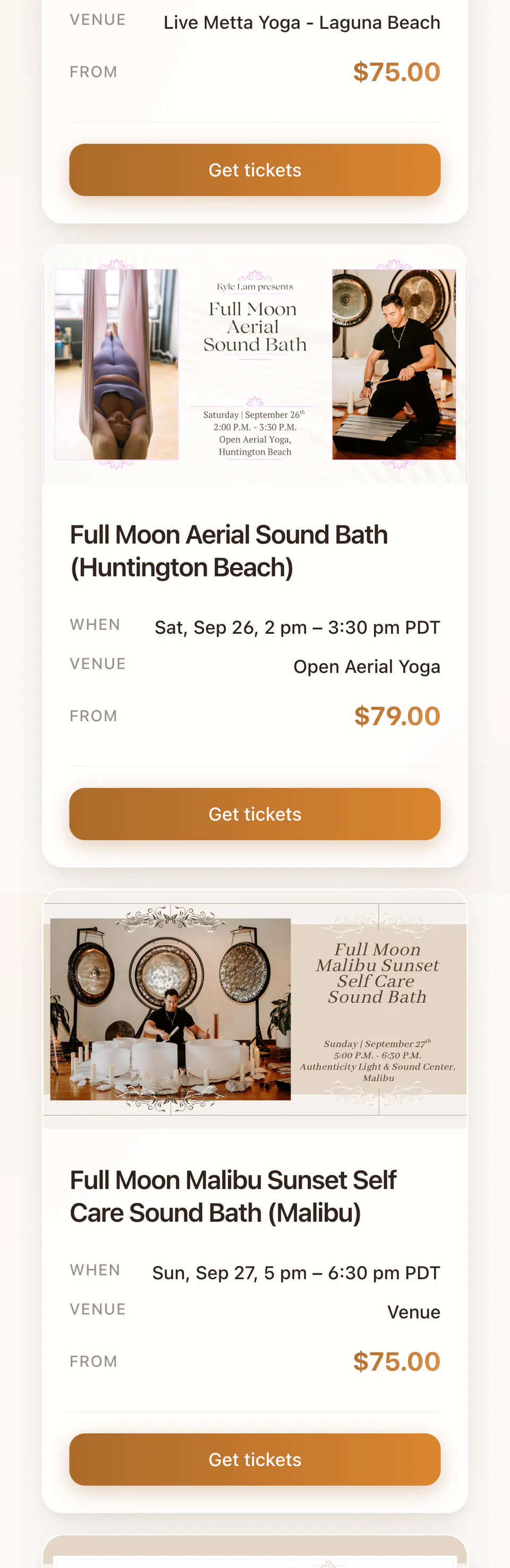
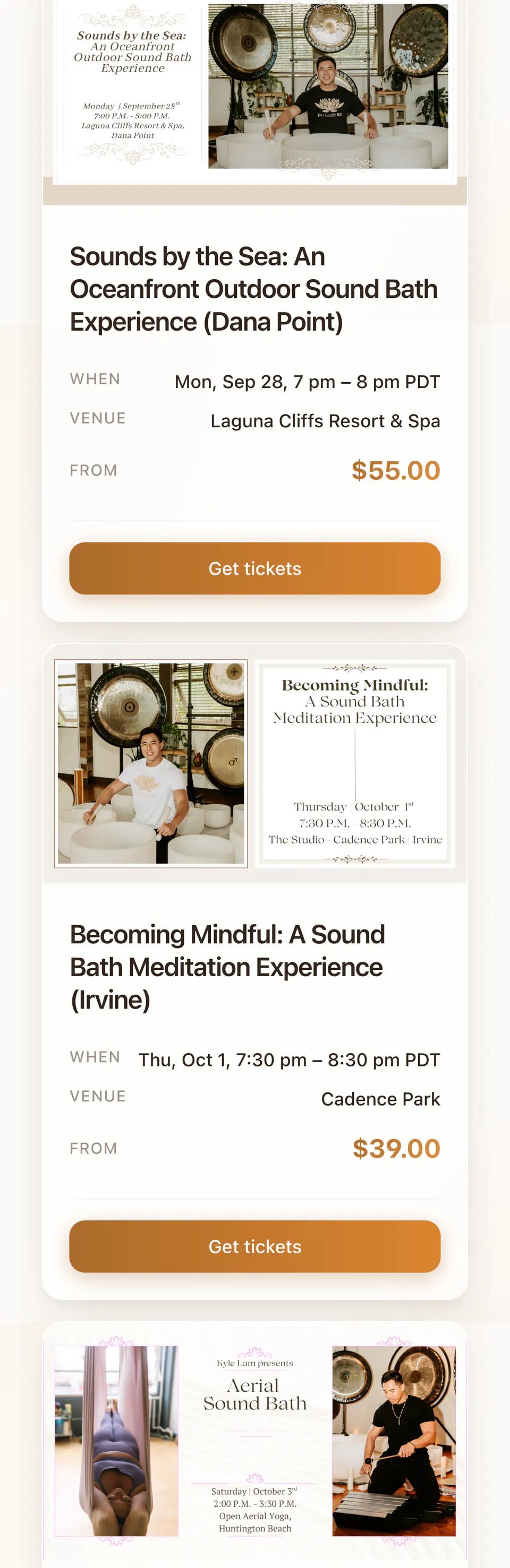
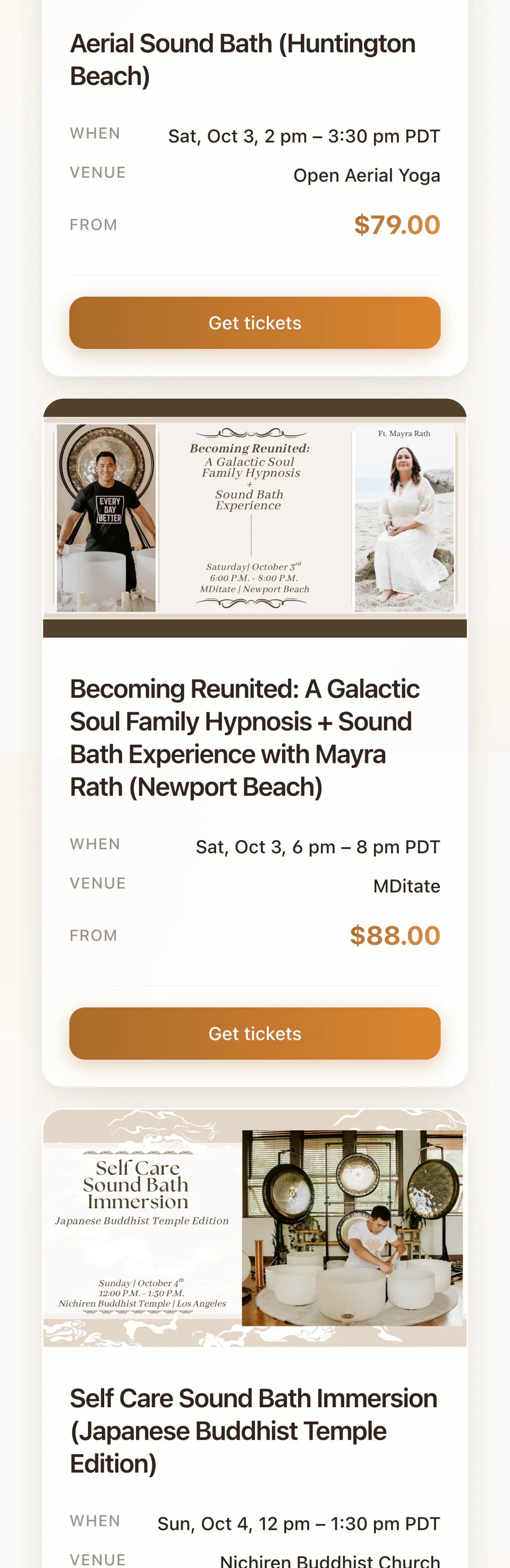
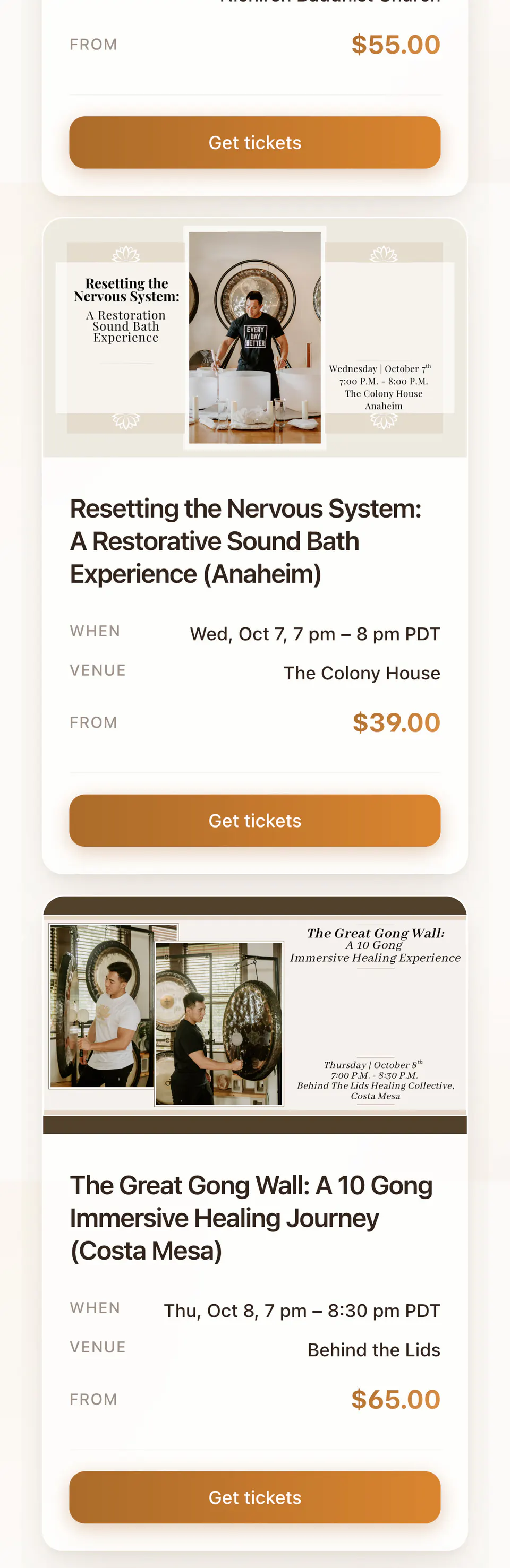
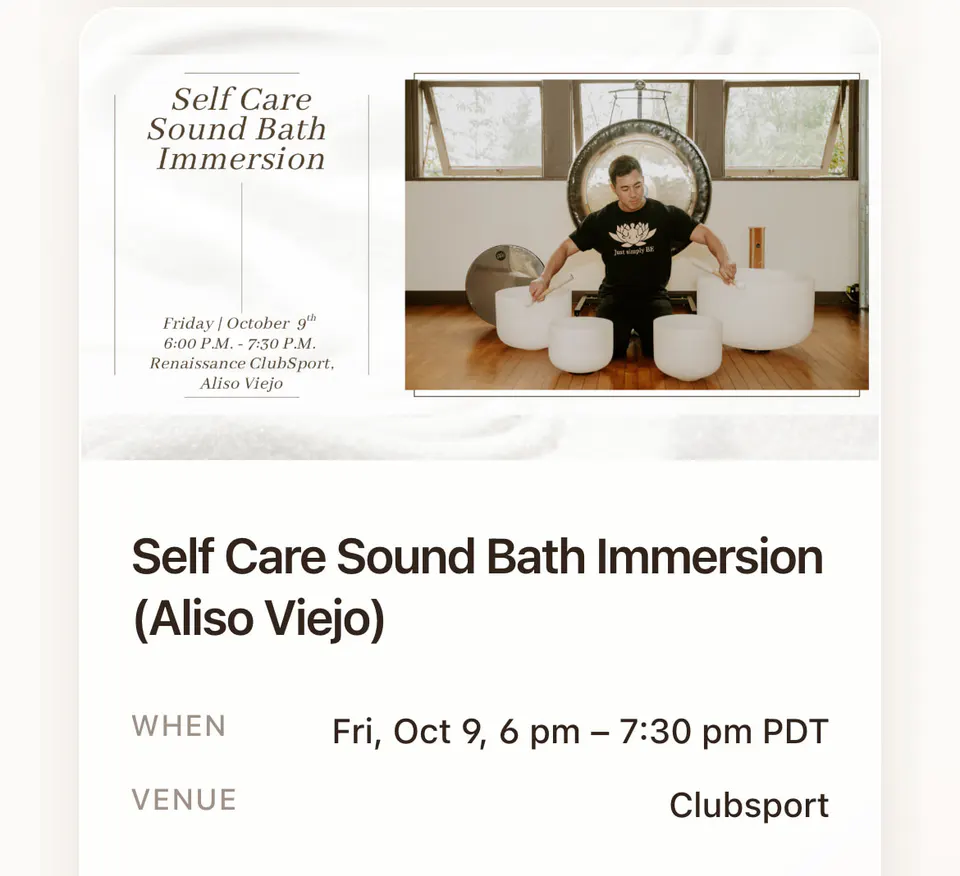
events.kylelamsoundhealing.com, captured in September 2026.
The client
(The client)
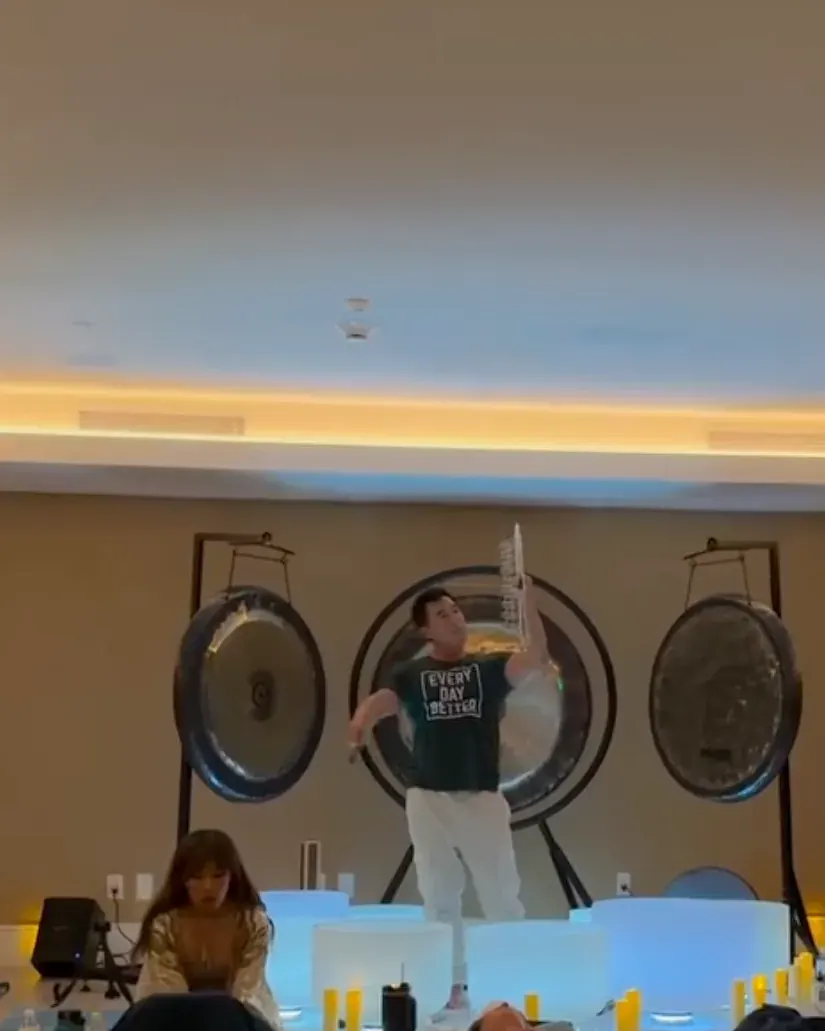
Kyle Lam Sound Healing runs recurring sound baths, ceremonies and practitioner collaborations across California and Florida, alongside paid private and group trainings for people going deeper into the practice.
It’s work built around the room: people show up in person for sound and ceremony, and some go on to train directly with Kyle.
Where we found them
As live events and trainings grew, registrations, payments, communications and attendance ran across separate tools that the practice did not own, and energy went into managing the gaps between them instead of into the events themselves.
What we saw
Operations split across systems
Events, trainings, ticketing and attendee records each lived in a different place, with nothing linking one to the next.
No single view of the practice
Revenue, logistics and attendance were tracked apart, so no one could see how an event was actually performing.
No room for new offerings
The setup could not absorb something like a training program without adding yet another outside tool.
The plan
We treated events and trainings as infrastructure: one product, owned by the practice, where the event, the checkout, the attendee and the person running the night each have a clear, permanent place.
That meant one system able to carry real payments and real bookings, with room to add a new kind of offer, like trainings, without reaching for another tool.
(What we built)
What we built
A production web application, separate from the main site, that runs event discovery, ticketing, trainings and the whole back office.
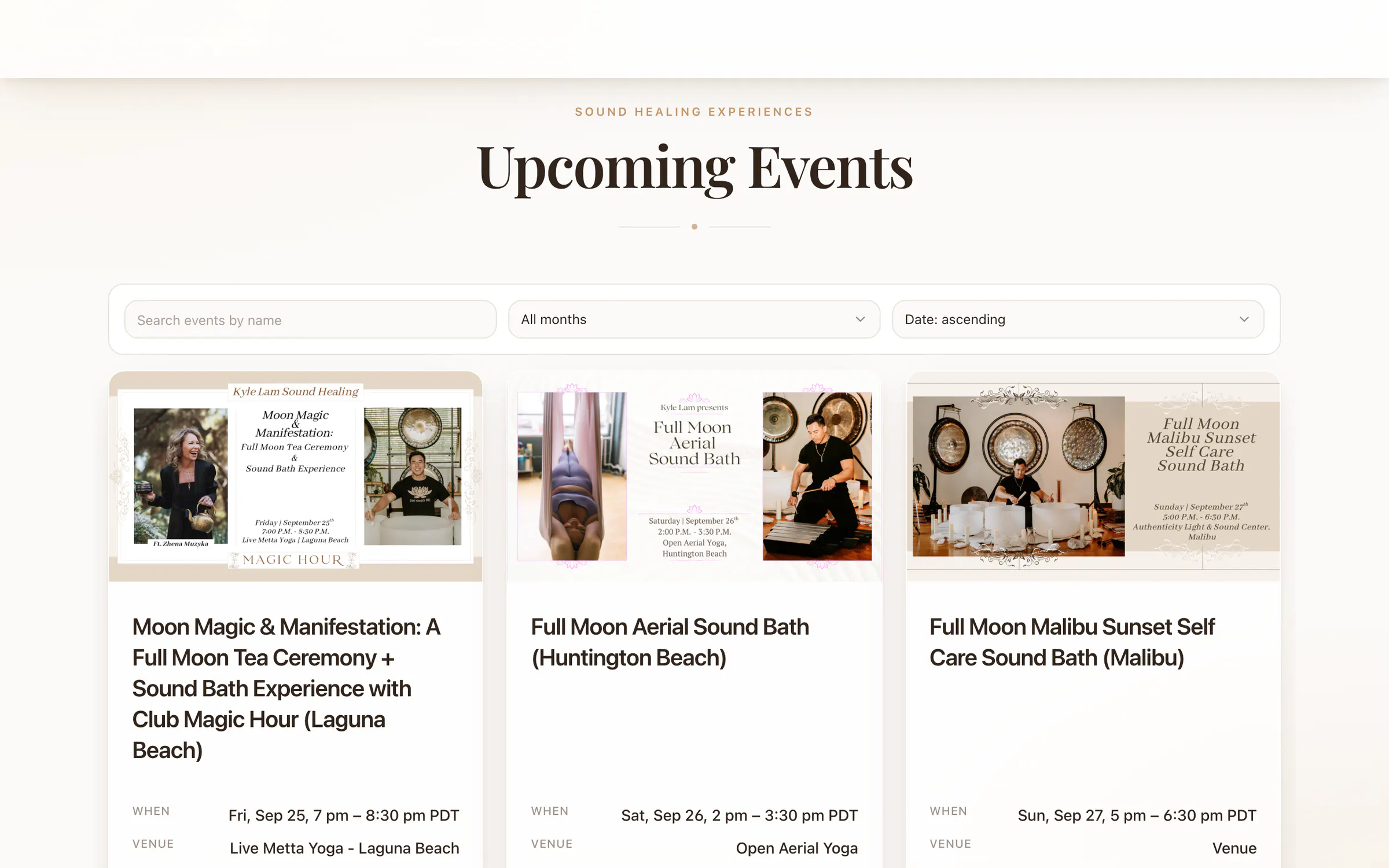
Finding an event and getting a ticket
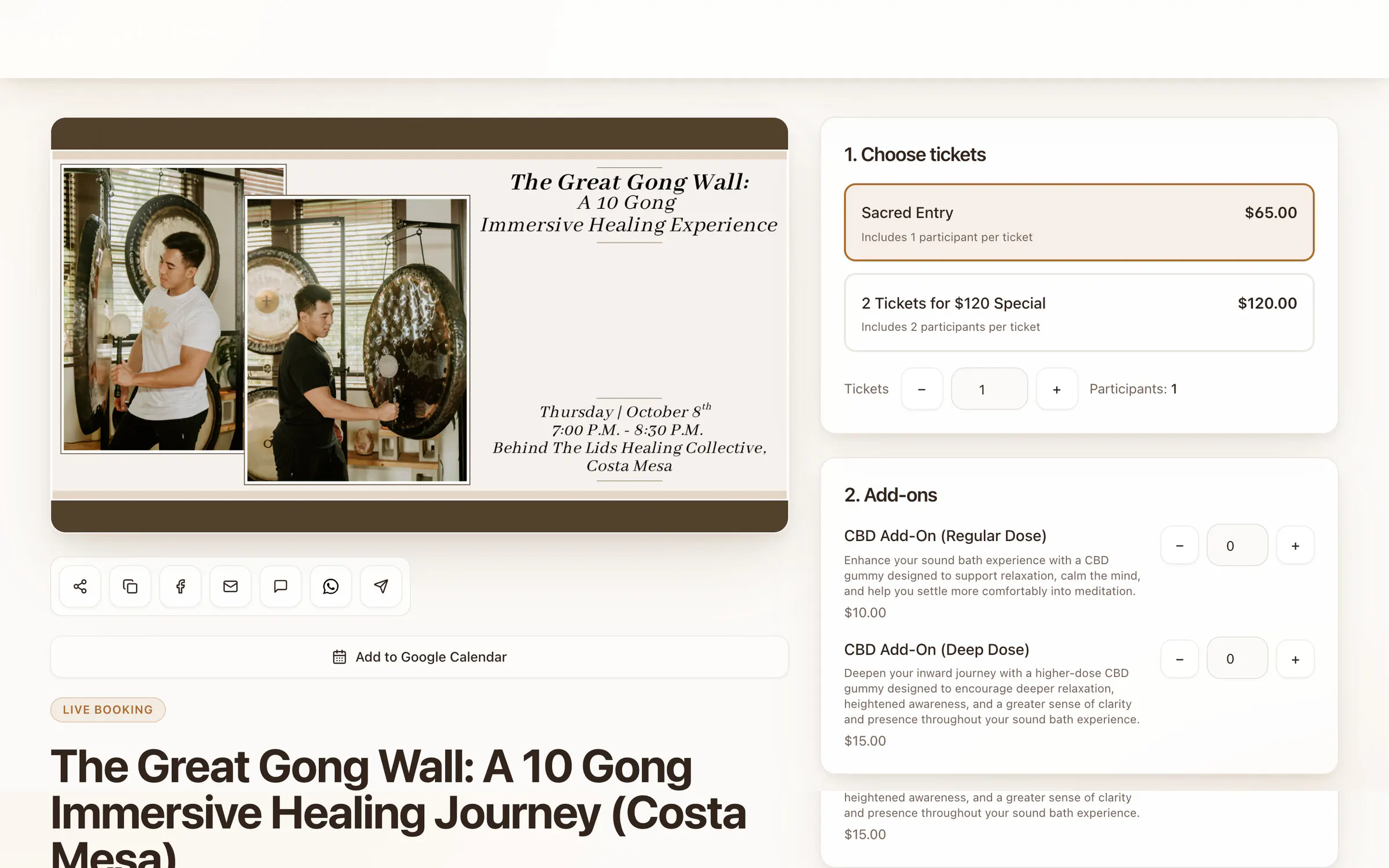
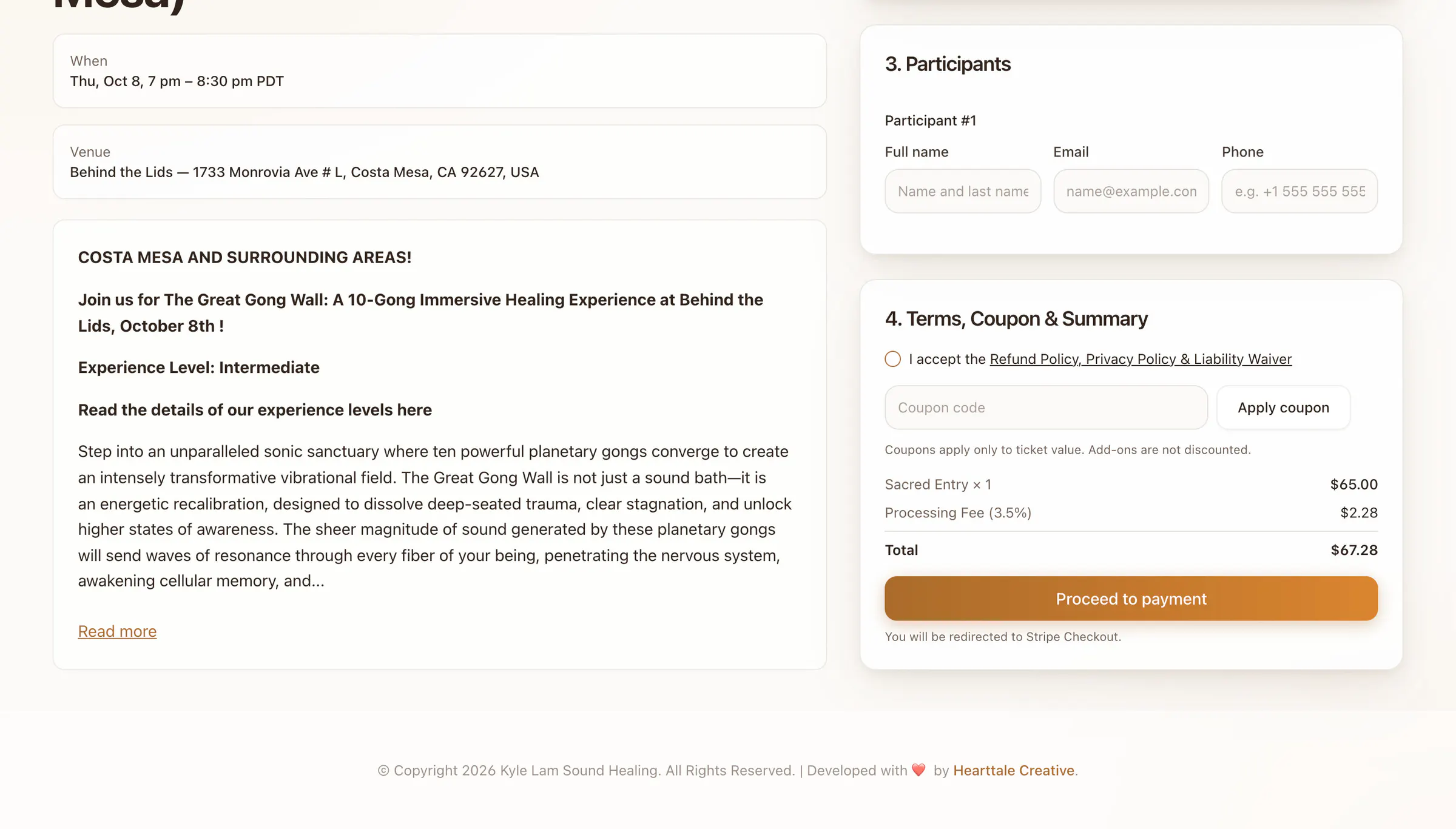
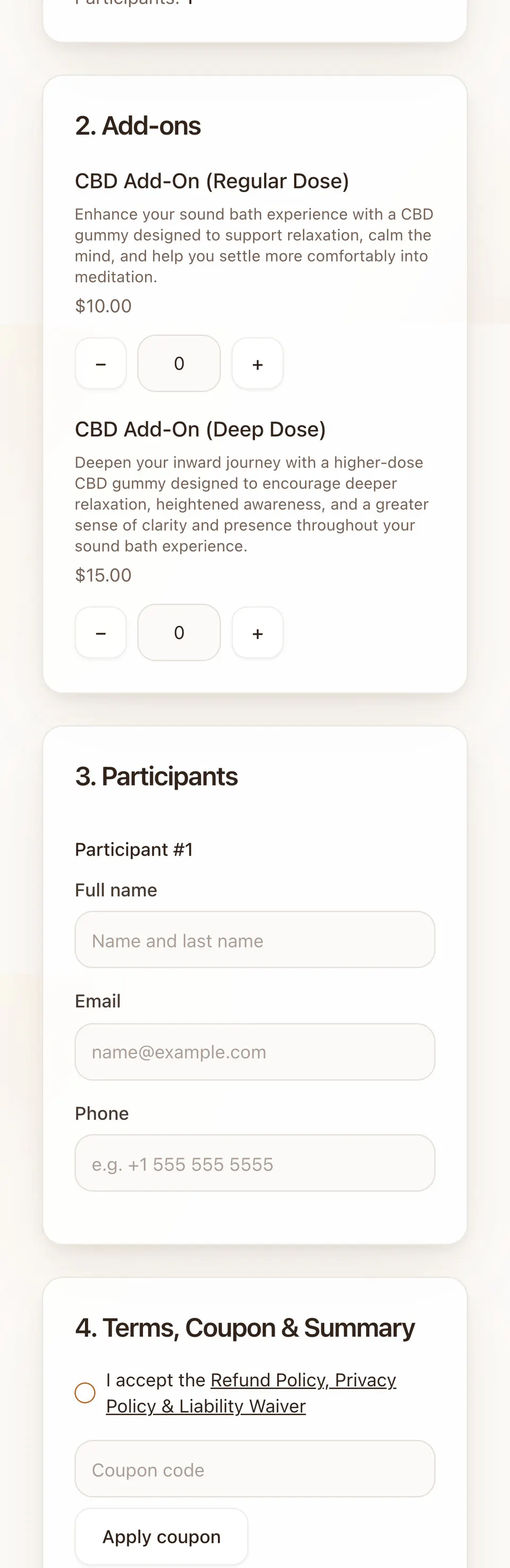
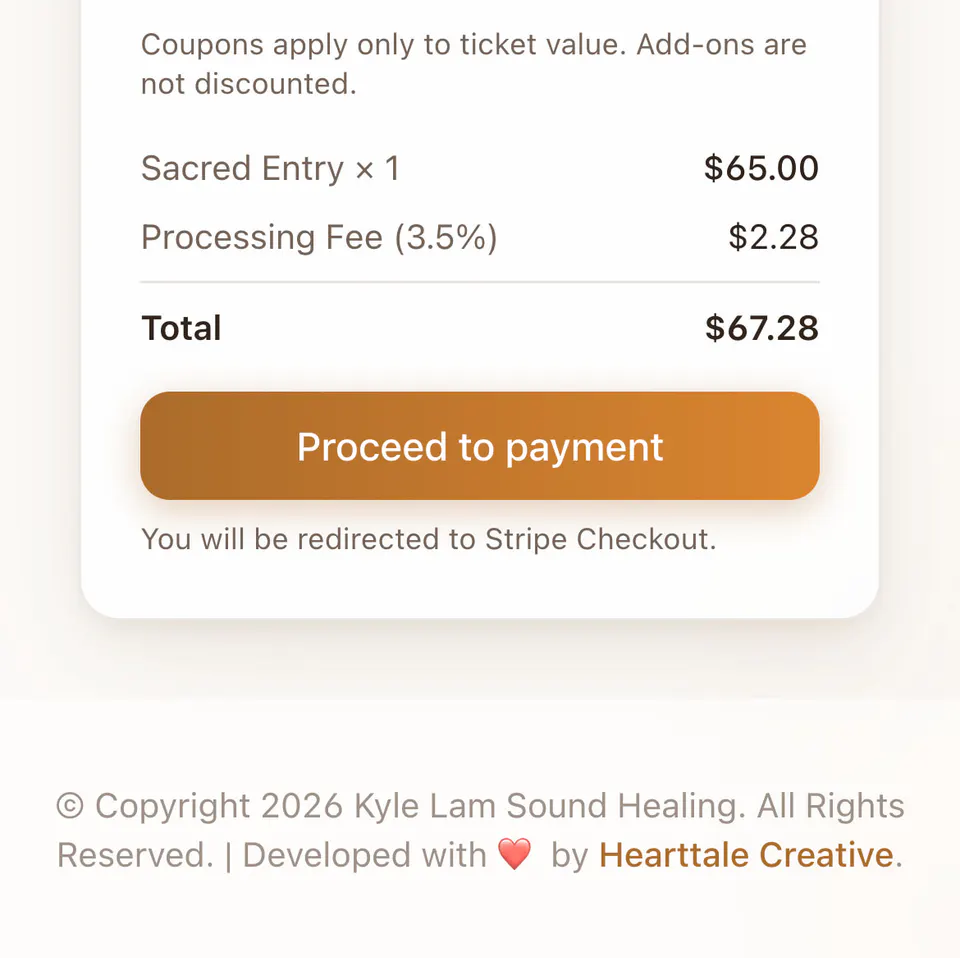
Visitors browse the homepage or filter by location, then buy on the event page itself: several ticket tiers with independent sale windows, add-ons with quantities, and a coupon field checked live. One ticket can register more than one person, and a confirmed order adds itself to Google Calendar and shares straight to WhatsApp, Facebook or text.
Trainings live in their own catalog, grouped by category with bundle pricing, and check out the same way, with its own processing fee. A few events route ticket sales to an outside platform instead of Stripe, but the app still captures the buyer’s email first, so the practice keeps its own list either way.
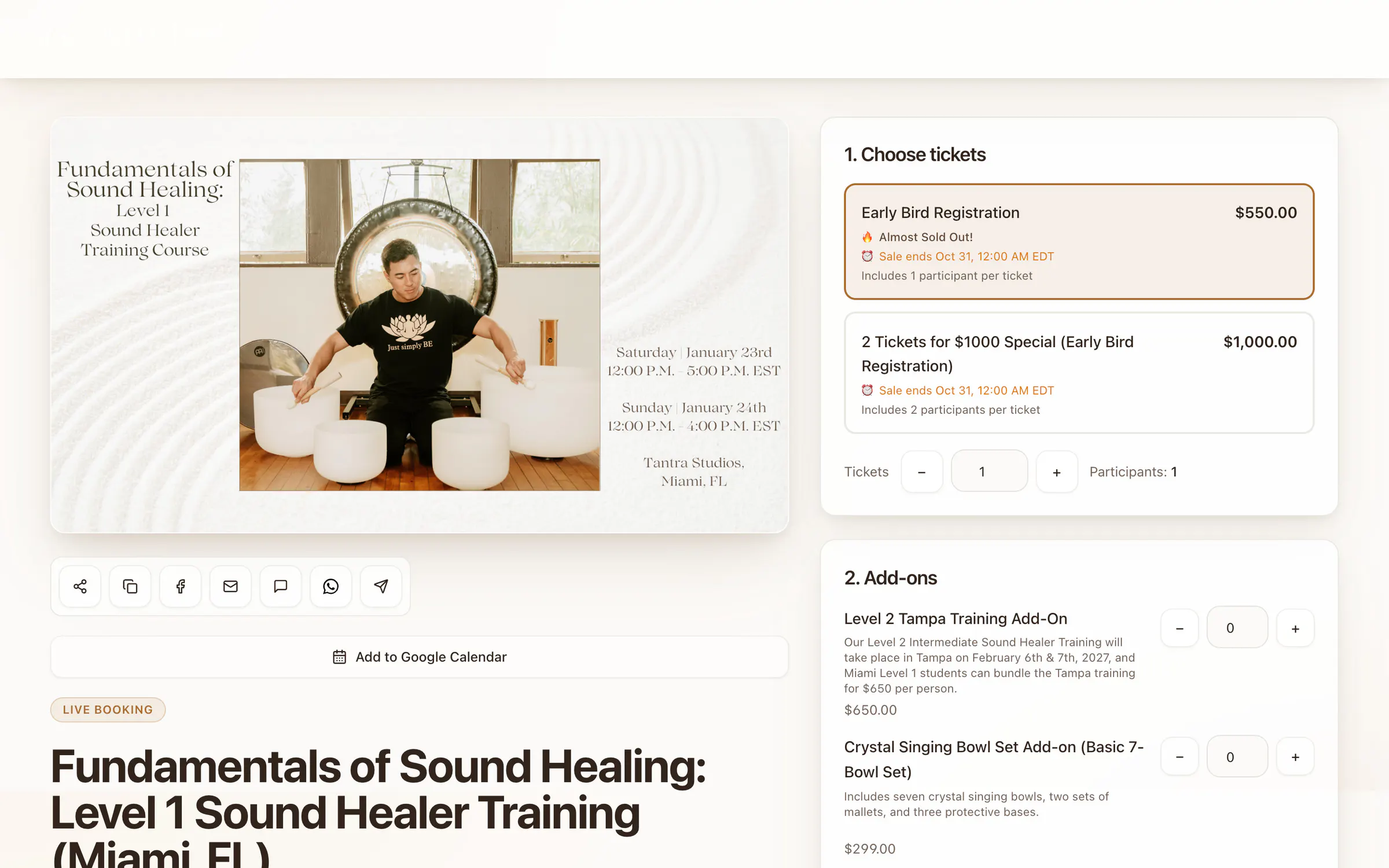
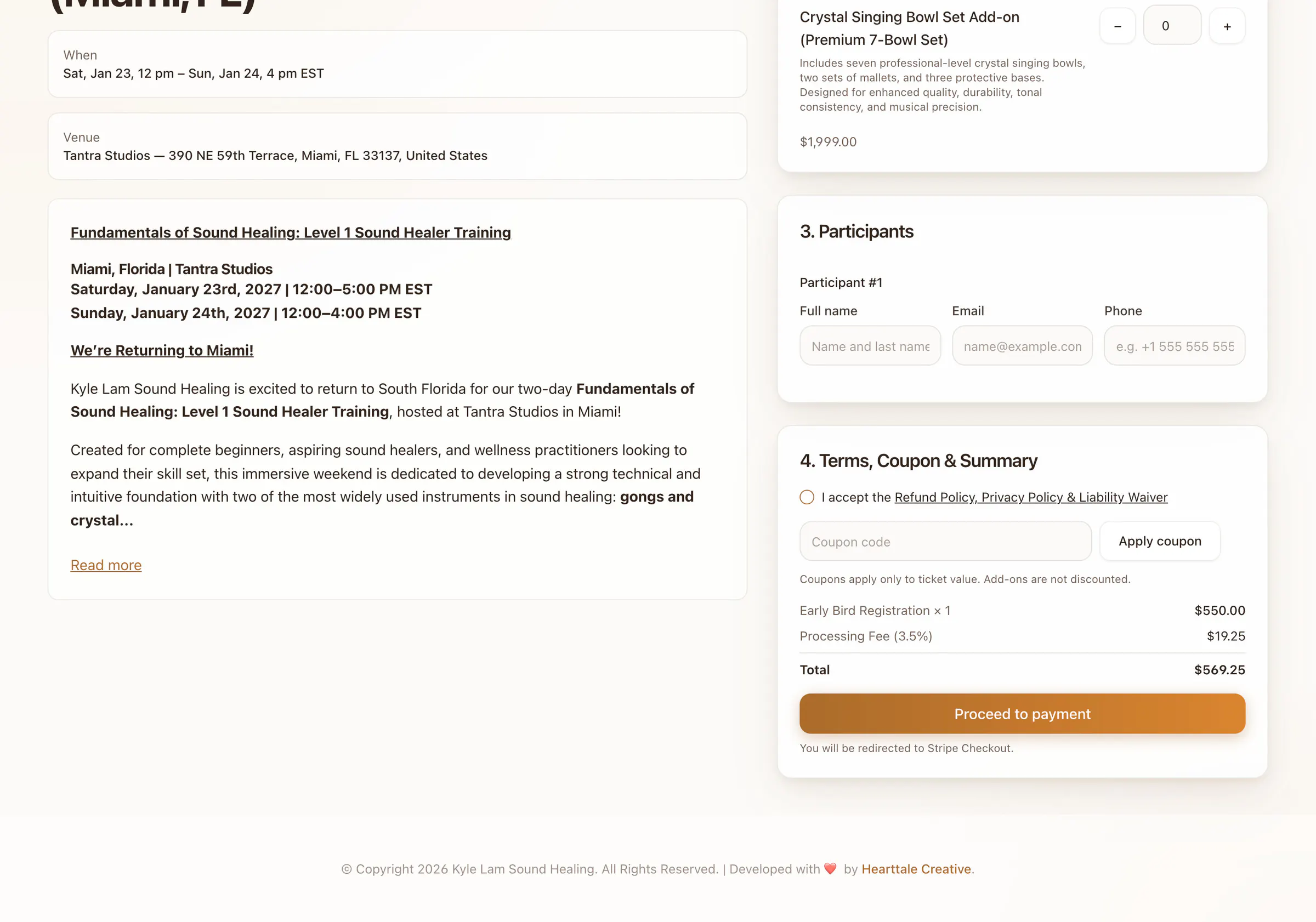
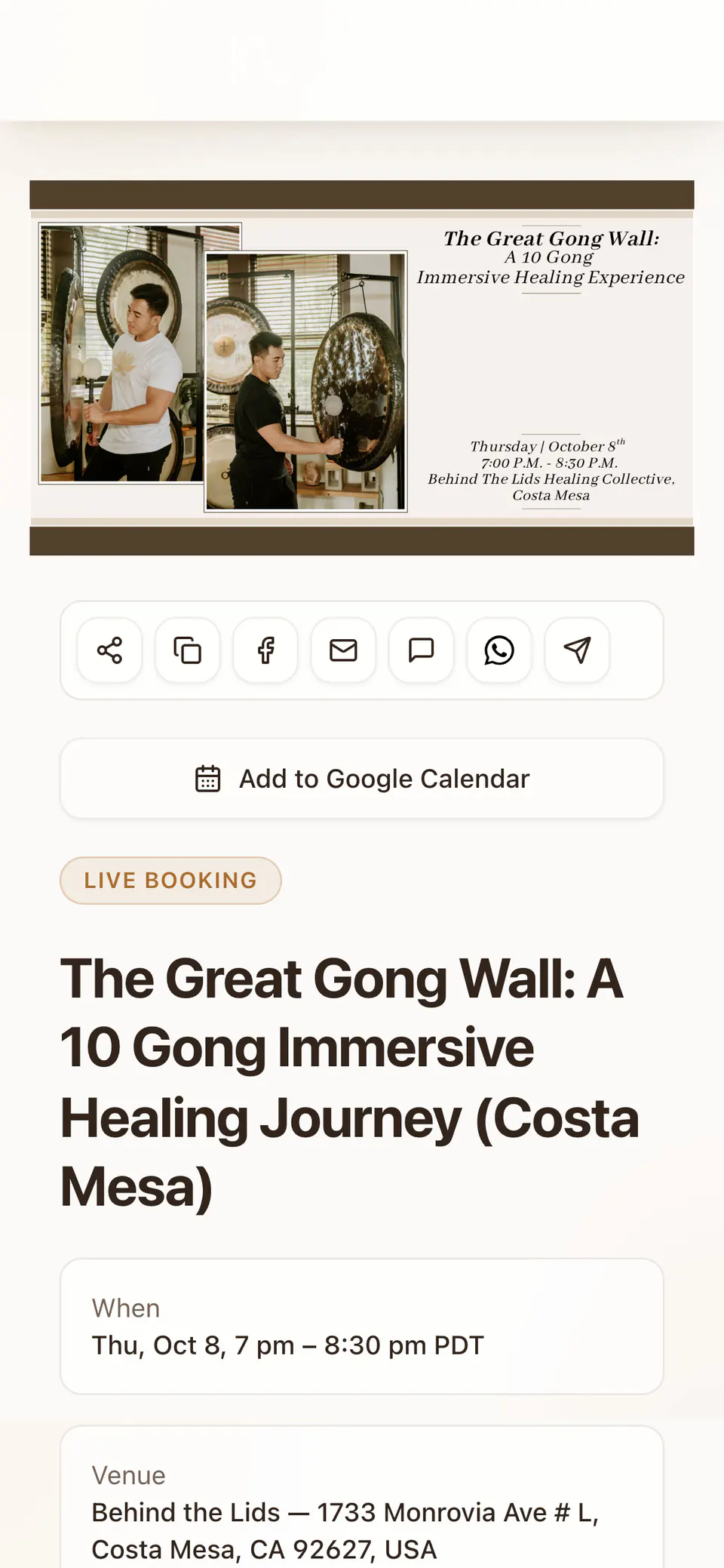
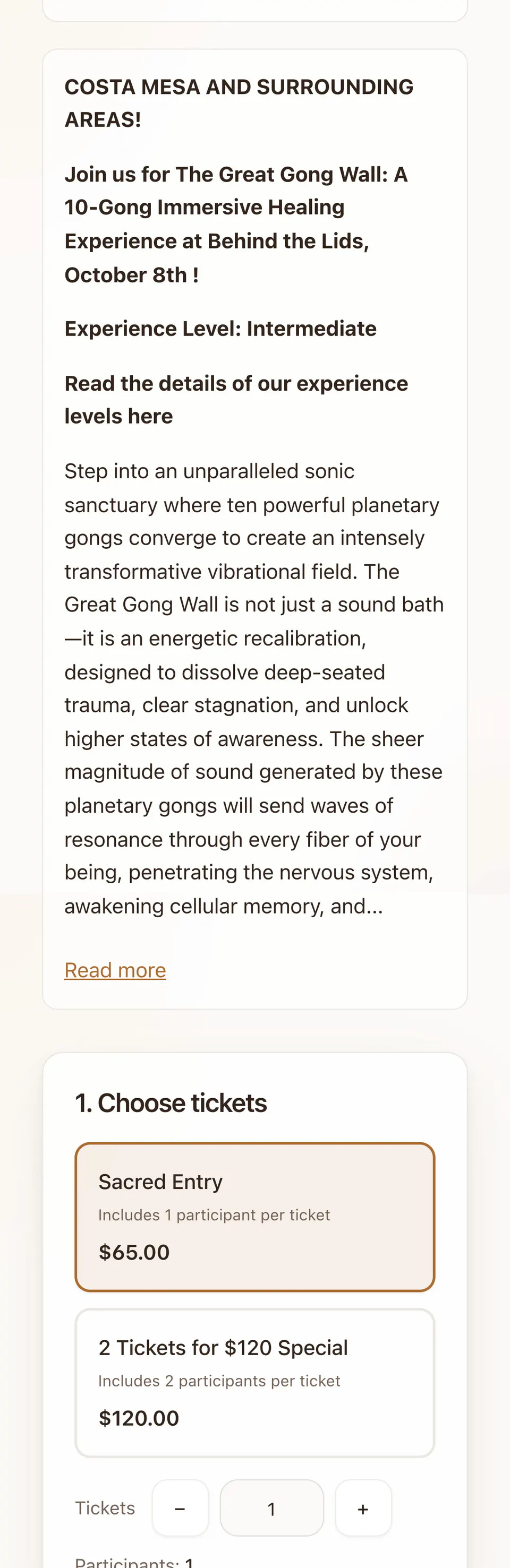
Running the whole operation from one screen
Behind the public pages sits a full admin suite: an analytics dashboard for ticket revenue, fill rate and check-ins, event and venue management, and coupon rules scoped to specific tickets. A people workspace blocks a card, email or phone number after fraud or abuse, enforced at checkout.
Attendees can be added, edited or checked in by QR code at the door. Newsletters go out through a builder that pulls live events into the email, and each new venue gets its own mailing list, so a message about a Florida event never reaches the California one.
Every event, ready to be shared
Each event page carries its own meta tags and schema markup, so listings read correctly to search engines from the day they publish. Sharing an event on WhatsApp, Facebook or Telegram pulls in the real title, description and image, rendered server side for exactly that purpose.
- Ticketing and checkout with tiered pricing, add-ons, coupons and sale windows.
- A parallel trainings catalog with its own registration and payment flow.
- An analytics dashboard for ticket revenue, fill rate and check-ins.
- A people workspace with fraud blocking, attendee management and QR check-in.
- A newsletter builder connected to mailing lists segmented by location and venue.
- Per-event social preview cards and structured data for search engines.
(The result)
Result
Kyle Lam runs every event and training from one platform the practice owns.
From the first ticket sold to the person walking through the door, it all happens in one place, and finding an event leads straight to holding a ticket.
- Events published
- 22
- In continuous care
- 13 months
Upcoming events live on the platform, 25 September 2026
Updates shipped since August 2025, project history
The team can see how each event is doing, financially and operationally, from one screen instead of piecing it together after the fact. A new kind of offering, like trainings, no longer means a new tool.
- Disconnected tools became one owned platform.
- Manual coordination became an admin suite the team runs itself.
- Scattered numbers became one dashboard for revenue and attendance.
- A single offering became a foundation that also carries trainings.
Before working with Hearttale, I used Humanitix, which offered a wide range of services and options for selling tickets to my events. But once I entrusted this part of my business to Hearttale, everything became much simpler, faster, more practical, and more beneficial for my business. I now have a system built specifically around my needs, with the flexibility to grow alongside my brand.Kyle Lam, founder of Kyle Lam Sound Healing
Services on this project
Have a project in mind?
hello@hearttalecreative.comOr use the form: three questions, two minutes. Start a project.